Author: admin

  • 7-day meal plan for elderly female

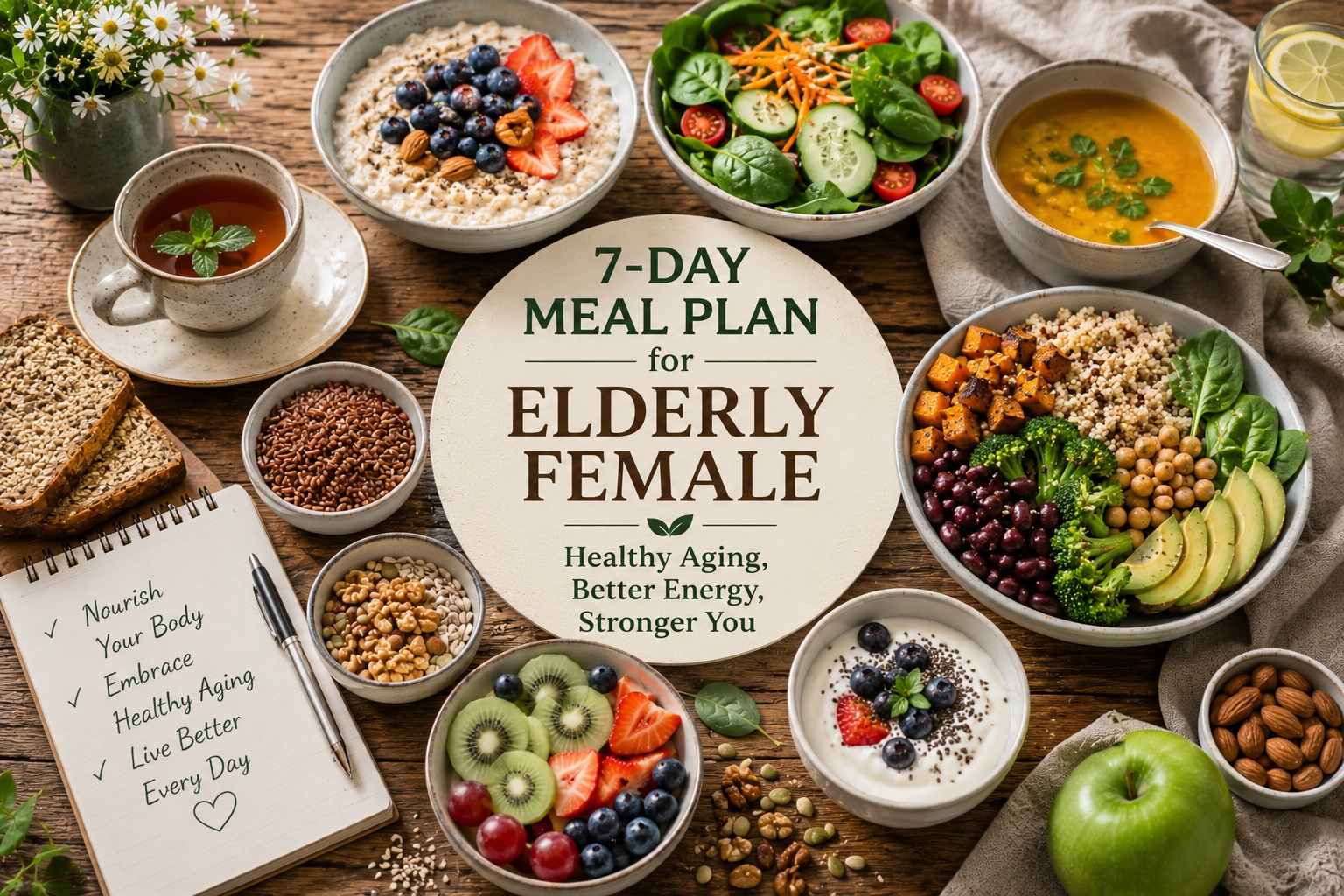
    7-day meal plan for elderly female

    As women age, proper nutrition becomes essential for maintaining energy, bone strength, digestion, immunity, and overall health. A balanced meal plan rich in protein, fiber, healthy fats, vitamins, and minerals can help elderly women stay active, independent, and healthier for longer.

    This 7-day meal plan is designed specifically for elderly women and focuses on:

    • Easy-to-digest meals
    • Balanced nutrition
    • Heart-friendly foods
    • Bone-strengthening nutrients
    • Healthy aging support

    If you are looking for more healthy aging nutrition ideas, you may also enjoy our articles on healthy foods for seniors, vegetarian diet plan for women over 60, and vegan diet plan for women over 60.

    Day 1


    Early Morning

    Warm lemon water


    Breakfast

    Oatmeal with berries and almonds
    Herbal tea


    Mid-Morning Snack

    Papaya bowl
    Lunch
    2 whole wheat chapatis
    Dal
    Spinach sabzi
    Salad
    Curd

    Evening Snack

    Green tea with roasted chana
    Dinner
    Vegetable soup
    Grilled paneer with sautéed vegetables
    Bedtime
    Warm turmeric milk

    Day 2

    Early Morning

    Chia seed water

    Breakfast

    Vegetable poha with peanuts
    Yogurt
    Mid-Morning Snack
    Apple slices with walnuts

    Lunch

    Brown rice
    Rajma curry
    Cucumber salad
    Evening Snack
    Buttermilk with flaxseeds

    Dinner

    Moong dal khichdi
    Vegetable salad
    Bedtime
    Chamomile tea

    Day 3

    Early Morning

    Herbal tea
    Breakfast
    Whole wheat toast with avocado
    Fresh fruit bowl
    Mid-Morning Snack
    Coconut water

    Lunch

    Quinoa vegetable bowl
    Lentil soup
    Evening Snack
    Sprouts salad

    Dinner

    Vegetable stew
    Whole wheat toast

    Bedtime

    Warm almond milk

    Day 4

    Early Morning

    Warm lemon water

    Breakfast

    Moong dal chilla with mint chutney
    Mid-Morning Snack
    Banana with almonds

    Lunch

    Millet khichdi
    Mixed vegetable curry
    Yogurt
    Evening Snack
    Green tea with mixed nuts

    Dinner

    Dal soup
    Stir-fried vegetables

    Bedtime

    Herbal tea


    Day 5

    Early Morning

    Chia seed water

    Breakfast

    Vegetable upma
    Fresh fruit bowl
    Mid-Morning Snack
    Orange slices

    Lunch

    Brown rice
    Chole curry
    Salad

    Evening Snack

    Roasted makhana

    Dinner

    Vegetable quinoa bowl
    Curd

    Bedtime

    Warm turmeric milk

    Day 6

    Early Morning

    Herbal tea

    Breakfast

    Greek yogurt with berries and chia seeds
    Mid-Morning Snack
    Apple with peanut butter

    Lunch

    Whole wheat chapatis
    Dal
    Leafy green vegetables

    Evening Snack

    Sprouts chaat

    Dinner

    Vegetable soup
    Grilled tofu or paneer
    Bedtime
    Chamomile tea

    Day 7

    Early Morning

    Warm lemon water
    Breakfast
    Oatmeal with banana and walnuts
    Mid-Morning Snack
    Fresh watermelon bowl


    Lunch

    Quinoa salad with vegetables
    Lentil soup

    Evening Snack

    Green tea with roasted peanuts

    Dinner

    Moong khichdi
    Vegetable curry


    Bedtime

    Warm almond milk


    Best Foods for Elderly Women

    1. Oats

    Supports heart health and digestion.

    1. Yogurt

    Strengthens bones and improves gut health.

    1. Leafy Greens

    Rich in calcium and antioxidants.

    1. Lentils and Beans

    Excellent source of protein and fiber.

    1. Fruits and Berries

    Supports immunity and hydration.

    1. Nuts and Seeds

    Healthy fats for brain and heart health.

    1. Whole Grains

    Provides long-lasting energy.

    Foods Elderly Women Should Limit
    Fried foods
    Excess sugar
    Highly processed snacks
    Soft drinks
    Excess salt
    Heavy late-night meals
    Healthy Lifestyle Tips for Elderly Women

    1. Stay Physically Active

    Walking, yoga, and stretching support mobility and balance.

    1. Stay Hydrated

    Drink enough water throughout the day.

    1. Prioritize Protein

    Protein helps maintain muscle strength.

    1. Eat Smaller Balanced Meals

    Smaller meals are easier to digest.

    1. Get Regular Health Checkups

    Monitor blood pressure, bone health, and nutritional deficiencies regularly.

    Final Thoughts

    A balanced meal plan can significantly improve energy levels, digestion, immunity, and overall quality of life for elderly women. Healthy eating combined with regular physical activity and proper hydration can help support graceful and healthy aging.

    Simple daily food choices can create long-term wellness benefits and help elderly women stay active, independent, and energetic.

  • Free Vegan Diet Plan for Women Over 60

    Free Vegan Diet Plan for Women Over 60

    As women enter their 60s, maintaining good nutrition becomes increasingly important for supporting healthy aging, bone strength, energy levels, digestion, and heart health. A well-balanced vegan diet can provide powerful health benefits when planned correctly.

    Plant-based foods are naturally rich in fiber, antioxidants, vitamins, minerals, and healthy fats that help reduce inflammation, support immunity, and improve overall wellness.

    For women over 60, a nutrient-dense vegan diet can help maintain healthy weight, improve digestion, support mobility, and promote long-term vitality.

    If you are exploring healthy aging nutrition, you may also enjoy reading our articles on Best Foods for People Aged 60 Plus and Vegetarian Diet Plan for Women Over 60 for additional healthy eating ideas.


    Why a Vegan Diet Can Be Beneficial After 60

    A healthy vegan lifestyle may help:

    • Improve heart health
    • Support healthy digestion
    • Reduce inflammation
    • Maintain healthy cholesterol levels
    • Improve energy naturally
    • Support healthy weight management
    • Increase antioxidant intake

    Women over 60 should especially focus on:

    • Plant-based protein
    • Calcium
    • Vitamin B12
    • Iron
    • Omega-3 fats
    • Fiber
    • Vitamin D

    Early Morning (6:00 AM – 7:00 AM)

    Start the Day with Hydration

    Option 1

    • Warm lemon water

    Option 2

    • Chia seed water

    Option 3

    • Herbal tea without sugar

    Benefits

    • Supports digestion
    • Helps hydration
    • Boosts metabolism gently
    • Promotes detoxification

    Breakfast (8:00 AM – 9:00 AM)

    Healthy Vegan Breakfast Options

    Option 1

    • Oatmeal with almond milk, berries, chia seeds, and walnuts

    Option 2

    • Avocado toast on whole grain bread

    Option 3

    • Vegan smoothie with spinach, banana, flaxseeds, and almond milk

    Option 4

    • Vegetable poha with peanuts

    Option 5

    • Tofu scramble with vegetables

    Benefits

    • Provides sustained energy
    • Supports heart health
    • Rich in fiber and antioxidants
    • Keeps you full longer

    For more nutritious superfoods, check out our article on healthy foods for young adults, where we discussed oats, nuts, seeds, and leafy greens in detail.


    Mid-Morning Snack (10:30 AM – 11:30 AM)

    Light Vegan Snack Options

    Option 1

    • Apple slices with peanut butter

    Option 2

    • Fresh fruit bowl

    Option 3

    • Coconut water

    Option 4

    • Handful of mixed nuts and seeds

    Option 5

    • Roasted chickpeas

    Benefits

    • Maintains steady energy
    • Supports immunity
    • Prevents unhealthy cravings

    Lunch (1:00 PM – 2:00 PM)

    Balanced Vegan Lunch Ideas

    Option 1

    • Brown rice
    • Dal
    • Mixed vegetable sabzi
    • Salad

    Option 2

    • Quinoa bowl with tofu, chickpeas, and vegetables

    Option 3

    • Millet khichdi with vegetables

    Option 4

    • Lentil soup with whole wheat roti

    Option 5

    • Vegan Buddha bowl with beans, avocado, quinoa, and greens

    Benefits

    • Rich in plant protein
    • Supports digestion
    • Provides fiber and minerals
    • Helps maintain healthy weight

    Whole grains and lentils are among the best foods for healthy aging because they provide steady energy and support digestive health.


    Evening Snack (4:30 PM – 5:30 PM)

    Healthy Vegan Evening Snacks

    Option 1

    • Green tea with roasted makhana

    Option 2

    • Sprouts salad

    Option 3

    • Hummus with cucumber and carrot sticks

    Option 4

    • Mixed nuts and seeds

    Option 5

    • Vegetable soup

    Benefits

    • Keeps hunger under control
    • Supports brain and heart health
    • Provides healthy fats and protein

    Dinner (7:00 PM – 8:00 PM)

    Light Vegan Dinner Options

    Option 1

    • Lentil soup with sautéed vegetables

    Option 2

    • Stir-fried tofu with broccoli and brown rice

    Option 3

    • Vegetable quinoa bowl

    Option 4

    • Vegan khichdi with vegetables

    Option 5

    • Mixed vegetable soup with whole grain toast

    Benefits

    • Easy to digest
    • Supports better sleep
    • Helps maintain healthy digestion

    Lighter dinners are especially beneficial after 60 because digestion naturally slows with age.


    Bedtime (9:30 PM – 10:00 PM)

    Healthy Vegan Bedtime Drinks

    Option 1

    • Warm almond milk with turmeric

    Option 2

    • Chamomile tea

    Option 3

    • Cinnamon oat milk

    Benefits

    • Promotes relaxation
    • Supports better sleep
    • Helps reduce inflammation

    Best Vegan Foods for Women Over 60

    1. Oats

    Supports heart health and digestion.

    2. Lentils and Beans

    Excellent plant-based protein source.

    3. Nuts and Seeds

    Healthy fats for brain and heart health.

    4. Leafy Greens

    Rich in calcium, iron, and antioxidants.

    5. Tofu

    Supports muscle and bone health.

    6. Berries and Fruits

    Boost immunity and healthy aging.

    7. Whole Grains

    Provides fiber and long-lasting energy.

    8. Chia and Flaxseeds

    Rich in omega-3 fatty acids.


    Nutrients Vegan Women Over 60 Should Monitor

    Vitamin B12

    Often requires supplementation in vegan diets.

    Calcium

    Important for bone health.

    Vitamin D

    Supports bone strength and immunity.

    Protein

    Essential for muscle maintenance.

    Iron

    Important for healthy blood circulation.


    Foods Vegan Women Over 60 Should Limit

    • Processed vegan junk foods
    • Excess sugar
    • Fried foods
    • Highly processed snacks
    • Excess salt
    • Sugary beverages

    Healthy Lifestyle Tips for Vegan Women Over 60

    1. Stay Physically Active

    Walking, yoga, and stretching support mobility and balance.

    2. Prioritize Protein Intake

    Include lentils, tofu, beans, quinoa, and nuts daily.

    3. Stay Hydrated

    Drink water consistently throughout the day.

    4. Eat Balanced Meals

    Include protein, healthy fats, and fiber in every meal.

    5. Get Regular Health Checkups

    Monitor Vitamin B12, Vitamin D, and calcium levels regularly.


    Final Thoughts

    A well-planned vegan diet can provide excellent nutrition for women over 60 and support healthy aging naturally. Plant-based foods rich in protein, fiber, antioxidants, vitamins, and minerals can improve digestion, energy levels, heart health, and overall wellness.

    Simple daily habits like eating more whole foods, staying active, and focusing on balanced nutrition can help women stay strong, active, and energetic as they age.

    Healthy aging is not about restriction — it is about nourishing the body with wholesome foods that support vitality and long-term wellness.

  • Free Vegetarian Diet Plan for Women Over 60: Healthy Aging, Strong Bones & Better Energy

    Free Vegetarian Diet Plan for Women Over 60: Healthy Aging, Strong Bones & Better Energy

    As women enter their 60s, maintaining good health becomes increasingly important. The body naturally experiences changes such as slower metabolism, reduced muscle mass, lower bone density, and changes in digestion. Hormonal shifts and lower physical activity levels may also impact energy, mobility, and overall wellness.

    A well-balanced vegetarian diet can play a major role in supporting healthy aging, improving digestion, strengthening bones, boosting immunity, and maintaining healthy weight.

    The best part is that vegetarian meals can be delicious, nourishing, affordable, and easy to prepare.

    If you are looking for more healthy aging nutrition ideas, you can also read our detailed guide on Best Foods for People Aged 60 Plus and explore our Healthy Foods for People Aged 25–30 article for family wellness inspiration.


    Why Vegetarian Nutrition Matters After 60

    A vegetarian diet rich in whole foods can help:

    • Improve heart health
    • Support bone strength
    • Maintain muscle mass
    • Improve digestion
    • Reduce inflammation
    • Support healthy blood sugar levels
    • Boost energy naturally

    Women over 60 should especially focus on:

    • Protein
    • Calcium
    • Vitamin D
    • Fiber
    • Iron
    • Healthy fats
    • Antioxidants

    Early Morning (6:00 AM – 7:00 AM)

    Start the Day with Hydration

    Option 1

    • Warm lemon water

    Option 2

    • Warm water with soaked chia seeds

    Option 3

    • Herbal tea without sugar

    Benefits

    • Supports digestion
    • Helps hydration
    • Improves metabolism
    • Promotes gentle detoxification

    Breakfast (8:00 AM – 9:00 AM)

    Healthy Vegetarian Breakfast Options

    Option 1

    • Oatmeal with berries, almonds, and chia seeds
    • Herbal tea

    Option 2

    • Vegetable poha with peanuts
    • Fresh yogurt

    Option 3

    • Whole wheat toast with avocado
    • Greek yogurt with fruits

    Option 4

    • Moong dal chilla with mint chutney

    Option 5

    • Vegetable upma with flaxseeds

    Benefits

    • Provides long-lasting energy
    • Supports heart health
    • Keeps you full longer
    • Improves digestion

    For more superfood ideas, check out our article on Best Foods for People Aged 20–25 where we discussed nutrient-rich foods like oats, yogurt, nuts, and leafy greens.


    Mid-Morning Snack (10:30 AM – 11:30 AM)

    Healthy Snack Options

    Option 1

    • Apple slices with almond butter

    Option 2

    • Papaya bowl

    Option 3

    • Coconut water

    Option 4

    • Mixed fruit bowl

    Option 5

    • Handful of walnuts and raisins

    Benefits

    • Maintains energy levels
    • Supports immunity
    • Reduces unhealthy cravings

    Lunch (1:00 PM – 2:00 PM)

    Balanced Vegetarian Lunch

    Option 1

    • 2 whole wheat chapatis
    • Dal
    • Green vegetable sabzi
    • Salad
    • Curd

    Option 2

    • Brown rice
    • Rajma curry
    • Steamed vegetables

    Option 3

    • Quinoa vegetable bowl
    • Lentil soup
    • Yogurt

    Option 4

    • Millet khichdi with vegetables

    Option 5

    • Paneer bhurji with whole wheat roti

    Benefits

    • Supports muscle maintenance
    • Provides fiber and protein
    • Improves digestion
    • Helps maintain healthy weight

    Whole grains and lentils are especially beneficial for seniors because they provide sustained energy without sudden sugar spikes.


    Evening Snack (4:30 PM – 5:30 PM)

    Light Evening Snacks

    Option 1

    • Green tea with roasted chana

    Option 2

    • Sprouts salad

    Option 3

    • Buttermilk with flaxseeds

    Option 4

    • Handful of mixed nuts

    Option 5

    • Vegetable soup

    Benefits

    • Prevents overeating at dinner
    • Provides healthy fats and protein
    • Supports heart health

    Dinner (7:00 PM – 8:00 PM)

    Light Vegetarian Dinner Ideas

    Option 1

    • Moong dal khichdi with curd

    Option 2

    • Vegetable soup with grilled paneer

    Option 3

    • Dal soup with sautéed vegetables

    Option 4

    • Stir-fried tofu with vegetables

    Option 5

    • Mixed vegetable quinoa bowl

    Benefits

    • Easy to digest
    • Supports better sleep
    • Helps maintain healthy digestion

    A lighter dinner is often recommended for seniors because digestion naturally slows with age.


    Bedtime (9:30 PM – 10:00 PM)

    Healthy Night Drinks

    Option 1

    • Warm turmeric milk

    Option 2

    • Chamomile tea

    Option 3

    • Warm almond milk

    Benefits

    • Promotes relaxation
    • Supports better sleep
    • Helps reduce inflammation

    Best Vegetarian Foods for Women Over 60

    1. Oats

    Supports heart health and digestion.

    2. Yogurt

    Improves gut health and strengthens bones.

    3. Nuts and Seeds

    Provides healthy fats and brain support.

    4. Lentils and Beans

    Excellent plant-based protein sources.

    5. Leafy Greens

    Rich in calcium, iron, and antioxidants.

    6. Fruits and Berries

    Boost immunity and hydration.

    7. Whole Grains

    Provides sustained energy and fiber.

    8. Paneer and Tofu

    Supports muscle strength and bone health.


    Foods Women Over 60 Should Limit

    • Fried foods
    • Excess sugar
    • Packaged snacks
    • Soft drinks
    • Excess salt
    • Refined flour products
    • Heavy late-night meals

    Healthy Lifestyle Tips for Vegetarian Women Over 60

    1. Stay Active Daily

    Walking, yoga, stretching, and light exercise improve mobility and balance.

    2. Increase Protein Intake

    Protein helps preserve muscle mass and strength.

    3. Stay Hydrated

    Drink water regularly throughout the day.

    4. Eat Smaller Balanced Meals

    Smaller meals are easier to digest and help maintain energy levels.

    5. Maintain Good Sleep Habits

    Proper sleep supports overall wellness and recovery.


    Final Thoughts

    A healthy vegetarian diet can provide all the essential nutrients needed for women over 60 to stay energetic, active, and healthy. The key is focusing on balanced meals rich in protein, fiber, healthy fats, vitamins, and minerals.

    Simple foods like oats, lentils, yogurt, nuts, fruits, leafy greens, and whole grains can make a huge difference in supporting healthy aging and improving quality of life.

    Healthy eating after 60 is not about strict dieting — it is about nourishing the body with wholesome foods that promote strength, energy, and long-term wellness.

  • Free Diet Plan for Women Over 60: Healthy Aging, Strong Bones & Better Energy

    Free Diet Plan for Women Over 60: Healthy Aging, Strong Bones & Better Energy

    As women enter their 60s, nutritional needs change significantly. Metabolism slows down, bone density may decrease, muscle mass naturally declines, and digestion can become more sensitive. Hormonal changes and reduced physical activity can also contribute to weight gain, fatigue, and lower energy levels.

    The good news is that a balanced and nutrient-rich diet can help women over 60 stay energetic, maintain healthy weight, improve heart health, strengthen bones, and support overall wellness.

    This free diet plan for women over 60 focuses on simple, healthy, and practical meals that provide the right balance of protein, fiber, healthy fats, vitamins, and minerals.


    Important Nutritional Needs for Women Over 60

    Women over 60 should prioritize:

    • Protein for muscle maintenance
    • Calcium and Vitamin D for bone health
    • Fiber for digestion
    • Omega-3 fats for heart and brain health
    • Antioxidants for healthy aging
    • Hydration for overall wellness

    Early Morning (6:00 AM – 7:00 AM)

    Start the Day with Hydration

    Option 1

    • 1 glass warm water with lemon

    Option 2

    • Warm water with soaked chia seeds

    Option 3

    • Herbal tea without sugar

    Benefits

    • Improves digestion
    • Helps hydration
    • Supports metabolism
    • Gentle detoxification

    Breakfast (8:00 AM – 9:00 AM)

    Healthy and Protein-Rich Breakfast Options

    Option 1

    • Oatmeal with berries and nuts
    • 1 boiled egg
    • Green tea

    Option 2

    • Vegetable poha with peanuts
    • Yogurt

    Option 3

    • Whole wheat toast with avocado
    • Greek yogurt with fruits

    Option 4

    • Moong dal chilla with mint chutney

    Benefits

    • Provides sustained energy
    • Supports heart health
    • Improves digestion
    • Keeps you full longer

    Mid-Morning Snack (10:30 AM – 11:30 AM)

    Light Healthy Snacks

    Option 1

    • Apple slices with almonds

    Option 2

    • Papaya bowl

    Option 3

    • Coconut water

    Option 4

    • Mixed fruit bowl

    Benefits

    • Maintains energy levels
    • Supports immunity
    • Prevents unhealthy cravings

    Lunch (1:00 PM – 2:00 PM)

    Balanced Lunch for Strong Bones and Better Energy

    Option 1

    • 2 whole wheat chapatis
    • Dal
    • Green vegetable sabzi
    • Salad
    • Curd

    Option 2

    • Brown rice
    • Grilled fish or paneer
    • Steamed vegetables

    Option 3

    • Quinoa vegetable bowl
    • Lentil soup
    • Yogurt

    Option 4

    • Millet khichdi with vegetables

    Benefits

    • Balanced nutrition
    • Supports digestion
    • Helps maintain healthy weight
    • Provides protein and fiber

    Evening Snack (4:30 PM – 5:30 PM)

    Healthy Evening Snack Ideas

    Option 1

    • Green tea with roasted chana

    Option 2

    • Handful of walnuts and almonds

    Option 3

    • Sprouts salad

    Option 4

    • Buttermilk with flaxseeds

    Benefits

    • Keeps hunger under control
    • Supports brain health
    • Provides healthy fats and protein

    Dinner (7:00 PM – 8:00 PM)

    Light and Easy-to-Digest Dinner

    Option 1

    • Vegetable soup
    • Grilled paneer or tofu

    Option 2

    • Dal soup with sautéed vegetables

    Option 3

    • Grilled chicken/fish with salad

    Option 4

    • Moong khichdi with curd

    Benefits

    • Supports digestion
    • Prevents heaviness at night
    • Helps maintain healthy sleep

    Bedtime (9:30 PM – 10:00 PM)

    Light Night Drink

    Option 1

    • Warm turmeric milk

    Option 2

    • Chamomile tea

    Benefits

    • Promotes better sleep
    • Supports immunity
    • Helps relaxation

    Best Foods for Women Over 60

    1. Leafy Greens

    Rich in calcium, iron, and antioxidants.

    2. Oats

    Supports heart health and digestion.

    3. Yogurt

    Improves gut health and strengthens bones.

    4. Nuts and Seeds

    Healthy fats for brain and heart health.

    5. Fatty Fish

    Rich in omega-3 fatty acids.

    6. Fruits and Berries

    High in vitamins and antioxidants.

    7. Lentils and Beans

    Excellent plant-based protein source.

    8. Whole Grains

    Provides long-lasting energy and fiber.


    Foods Women Over 60 Should Limit

    • Excess sugar
    • Fried foods
    • Processed snacks
    • Soft drinks
    • Excess salt
    • Refined carbohydrates
    • Heavy late-night meals

    Healthy Lifestyle Tips for Women Over 60

    1. Stay Physically Active

    Walking, yoga, stretching, and light strength training are highly beneficial.

    2. Stay Hydrated

    Drink enough water throughout the day.

    3. Prioritize Sleep

    Good sleep supports recovery and mental health.

    4. Eat Smaller Balanced Meals

    Smaller meals are easier to digest.

    5. Regular Health Checkups

    Monitor blood pressure, sugar levels, and bone health regularly.


    Final Thoughts

    Healthy eating after 60 is about nourishment, balance, and maintaining independence and energy. A nutrient-rich diet combined with regular activity can help women stay healthy, active, and confident as they age.

    Simple daily habits like eating more whole foods, staying hydrated, and choosing balanced meals can create long-term health benefits and improve overall quality of life.

  • 10 Best Foods for People Aged 60 Plus: A Complete Guide to Healthy Aging and Better Energy

    10 Best Foods for People Aged 60 Plus: A Complete Guide to Healthy Aging and Better Energy

    As people enter their 60s and beyond, the body undergoes several natural changes. Metabolism slows down, muscle mass gradually decreases, bones become weaker, digestion changes, and immunity may decline. Energy levels can fluctuate more often, and maintaining overall health becomes increasingly important.

    At this stage of life, proper nutrition plays a major role in supporting healthy aging, maintaining independence, improving mobility, strengthening immunity, and enhancing quality of life.

    The good news is that choosing the right foods can help older adults stay active, energetic, mentally sharp, and healthier for longer.

    In this article, we will explore the 10 best foods for people aged 60 plus and understand why these foods are highly beneficial for senior health and wellness.


    1. Fatty Fish – Excellent for Heart and Brain Health

    Fatty fish like salmon, sardines, tuna, and mackerel are rich in omega-3 fatty acids, which are extremely beneficial for older adults.

    Why Fatty Fish Are Beneficial

    • Supports heart health
    • Helps reduce inflammation
    • Improves brain function and memory
    • Supports joint health
    • Helps lower risk of age-related diseases

    Omega-3 fatty acids are particularly important for maintaining cognitive function and reducing the risk of heart problems.

    Best Ways to Eat Fatty Fish

    • Grilled salmon
    • Fish curry
    • Baked fish
    • Fish soups
    • Fish salads

    2. Eggs – High-Quality Protein for Muscle Strength

    Protein becomes increasingly important after the age of 60 because muscle mass naturally declines with age.

    Why Eggs Are Beneficial

    • Supports muscle maintenance
    • Easy to digest
    • Rich in Vitamin B12 and Vitamin D
    • Helps maintain strength and energy
    • Supports brain health

    Eggs are affordable, versatile, and packed with essential nutrients needed for healthy aging.

    Best Ways to Eat Eggs

    • Boiled eggs
    • Soft omelets
    • Scrambled eggs
    • Egg sandwiches
    • Vegetable egg bowls

    3. Leafy Green Vegetables – Nutrient-Dense Superfoods

    Leafy greens like spinach, kale, broccoli, and fenugreek leaves are loaded with vitamins, minerals, calcium, and antioxidants.

    Why Leafy Greens Are Beneficial

    • Strengthens bones
    • Improves digestion
    • Supports healthy blood circulation
    • Boosts immunity
    • Helps maintain healthy vision

    Older adults are more likely to develop nutritional deficiencies, making leafy vegetables an essential part of the diet.

    Best Ways to Eat Leafy Greens

    • Soups
    • Salads
    • Stir-fried vegetables
    • Green smoothies
    • Vegetable curries

    4. Oats – Heart-Friendly Energy Source

    Oats are rich in fiber, especially beta-glucan, which helps support heart health and digestion.

    Why Oats Are Beneficial

    • Helps lower cholesterol
    • Supports healthy digestion
    • Provides steady energy
    • Helps manage blood sugar levels
    • Keeps you full longer

    Oats are gentle on digestion and make an excellent breakfast choice for seniors.

    Best Ways to Eat Oats

    • Oatmeal
    • Overnight oats
    • Oat porridge
    • Smoothie bowls
    • Oat pancakes

    5. Yogurt and Dairy Products – Strong Bones and Gut Health

    Yogurt, milk, and other dairy products are excellent sources of calcium, protein, and probiotics.

    Why Dairy Products Are Beneficial

    • Strengthens bones and teeth
    • Supports gut health
    • Helps prevent osteoporosis
    • Improves digestion
    • Supports immunity

    Greek yogurt and probiotic-rich yogurt are especially beneficial for maintaining digestive health.

    Best Ways to Eat Dairy Products

    • Yogurt bowls
    • Smoothies
    • Buttermilk
    • Cottage cheese
    • Healthy desserts

    6. Nuts and Seeds – Healthy Fats and Brain Support

    Nuts and seeds provide healthy fats, protein, magnesium, and antioxidants that support overall wellness.

    Best Nuts and Seeds

    • Almonds
    • Walnuts
    • Chia seeds
    • Flaxseeds
    • Pumpkin seeds

    Why Nuts and Seeds Are Beneficial

    • Supports brain health
    • Improves heart health
    • Provides natural energy
    • Supports healthy skin
    • Reduces inflammation

    Walnuts are particularly beneficial for memory and cognitive health.

    Best Ways to Eat Nuts and Seeds

    • Healthy snacks
    • Smoothie toppings
    • Oatmeal toppings
    • Nut mixes
    • Yogurt bowls

    7. Fruits – Natural Vitamins and Hydration

    Fruits are rich in vitamins, minerals, antioxidants, and fiber that support healthy aging.

    Best Fruits for Seniors

    • Apples
    • Bananas
    • Berries
    • Oranges
    • Papaya
    • Pomegranate
    • Watermelon

    Why Fruits Are Beneficial

    • Supports immunity
    • Improves digestion
    • Helps maintain hydration
    • Supports heart health
    • Provides natural energy

    Berries are especially rich in antioxidants that help protect cells from aging-related damage.

    Best Ways to Eat Fruits

    • Fruit salads
    • Smoothies
    • Fresh juices
    • Healthy desserts
    • Snack bowls

    8. Whole Grains – Sustained Energy and Better Digestion

    Whole grains provide slow-digesting carbohydrates and fiber that help maintain stable energy levels.

    Best Whole Grains

    • Brown rice
    • Whole wheat
    • Quinoa
    • Millet
    • Barley

    Why Whole Grains Are Beneficial

    • Improves digestion
    • Supports heart health
    • Helps manage blood sugar
    • Provides long-lasting energy
    • Helps maintain healthy weight

    Whole grains are healthier alternatives to refined carbohydrates.

    Best Ways to Eat Whole Grains

    • Brown rice bowls
    • Whole wheat chapatis
    • Quinoa salads
    • Millet khichdi
    • Whole grain soups

    9. Beans and Lentils – Plant-Based Protein and Fiber

    Beans and lentils are rich in protein, iron, fiber, and essential nutrients.

    Why Beans and Lentils Are Beneficial

    • Supports muscle health
    • Improves digestion
    • Helps maintain stable blood sugar
    • Supports heart health
    • Affordable and nutritious

    Plant-based proteins are excellent additions to a senior-friendly diet.

    Best Ways to Eat Beans and Lentils

    • Dal soups
    • Lentil curries
    • Bean salads
    • Healthy stews
    • Protein bowls

    10. Dark Chocolate – Healthy Treat for Heart and Mood

    Dark chocolate contains antioxidants that may support heart health and mental wellness when consumed in moderation.

    Why Dark Chocolate Is Beneficial

    • Supports heart health
    • Helps improve mood
    • Provides antioxidants
    • May improve brain function
    • Reduces stress

    Choose dark chocolate with higher cocoa content and lower sugar levels.

    Best Ways to Eat Dark Chocolate

    • Small healthy snacks
    • With nuts
    • Healthy desserts
    • Smoothies
    • Homemade energy bites

    Healthy Lifestyle Tips for People Aged 60 Plus

    1. Stay Physically Active

    Walking, yoga, stretching, and light exercises help maintain mobility and strength.

    2. Stay Hydrated

    Older adults are more prone to dehydration, so regular water intake is essential.

    3. Prioritize Protein Intake

    Adequate protein helps preserve muscle mass and strength.

    4. Limit Processed Foods

    Reduce consumption of excessive salt, sugar, and fried foods.

    5. Maintain Regular Health Checkups

    Routine health screenings help identify nutritional deficiencies and health concerns early.


    Final Thoughts

    Healthy eating becomes increasingly important after the age of 60. Proper nutrition can help maintain independence, improve energy levels, strengthen bones, support heart health, and enhance overall quality of life.

    Including foods like fatty fish, eggs, leafy greens, oats, yogurt, fruits, whole grains, nuts, and lentils in daily meals can significantly improve long-term health and wellness.

    Healthy aging is not only about living longer — it is about living better, staying active, and enjoying life with strength and vitality.

  • 10 Best Foods for People Aged 25–30: A Complete Guide to Energy, Fitness & Long-Term Health

    10 Best Foods for People Aged 25–30: A Complete Guide to Energy, Fitness & Long-Term Health

    The age group between 25 and 30 is often considered one of the busiest and most demanding phases of life. Careers become more serious, responsibilities increase, stress levels rise, and health often takes a backseat. Many people in this age bracket struggle to balance work, fitness, social life, sleep, and healthy eating.

    This is also the stage where the body’s metabolism slowly begins to change. Poor dietary choices can start showing visible effects in the form of fatigue, weight gain, low stamina, poor digestion, stress, skin problems, and reduced productivity.

    The good news is that the right nutrition can significantly improve physical health, mental clarity, energy levels, and long-term wellness.

    In this article, we will explore the 10 best foods for people aged 25–30 and understand why these foods are highly beneficial for maintaining a healthy and active lifestyle.


    1. Avocados – Healthy Fats for Energy and Heart Health

    Avocados are loaded with healthy monounsaturated fats, fiber, potassium, and essential vitamins that support heart health and sustained energy.

    Why Avocados Are Beneficial

    • Supports heart health
    • Helps maintain healthy cholesterol levels
    • Keeps you full for longer
    • Improves skin quality
    • Provides long-lasting energy

    People aged 25–30 often deal with stressful schedules and irregular eating habits. Avocados provide healthy fats that support brain function and overall wellness.

    Best Ways to Eat Avocados

    • Avocado toast
    • Smoothies
    • Salads
    • Guacamole
    • Healthy sandwiches

    2. Eggs – Complete Protein for Busy Lifestyles

    Eggs continue to be one of the most nutritious foods for adults in their late 20s. They are rich in protein, vitamins, minerals, and healthy fats.

    Why Eggs Are Beneficial

    • Supports muscle maintenance
    • Helps improve concentration and memory
    • Boosts metabolism
    • Keeps you energized
    • Easy and quick to prepare

    For working professionals and fitness enthusiasts, eggs are an affordable and versatile protein source.

    Best Ways to Eat Eggs

    • Boiled eggs
    • Vegetable omelets
    • Scrambled eggs
    • Protein wraps
    • Egg salads

    3. Salmon and Fatty Fish – Essential for Brain and Heart Health

    Fatty fish like salmon, sardines, and tuna are rich in omega-3 fatty acids, which are extremely important for adults dealing with work stress and busy routines.

    Why Fatty Fish Are Beneficial

    • Reduces inflammation
    • Supports brain function
    • Improves heart health
    • Helps reduce stress and anxiety
    • Supports workout recovery

    Omega-3 fats also help maintain healthy skin and reduce fatigue caused by stressful lifestyles.

    Best Ways to Eat Fatty Fish

    • Grilled salmon
    • Fish rice bowls
    • Fish salads
    • Baked fish meals
    • Fish wraps

    4. Greek Yogurt – Gut Health and High Protein Nutrition

    Greek yogurt is packed with protein, probiotics, calcium, and essential nutrients that support digestion and immunity.

    Why Greek Yogurt Is Beneficial

    • Improves gut health
    • Helps maintain lean muscle
    • Supports immunity
    • Keeps you full longer
    • Strengthens bones

    As metabolism starts changing during the late 20s, maintaining gut health becomes increasingly important.

    Best Ways to Eat Greek Yogurt

    • Smoothies
    • Fruit parfaits
    • Healthy desserts
    • Protein bowls
    • Breakfast snacks

    5. Nuts and Seeds – Smart Snacks for Energy and Focus

    Nuts and seeds provide healthy fats, fiber, protein, antioxidants, and minerals that support overall health.

    Best Nuts and Seeds

    • Almonds
    • Walnuts
    • Chia seeds
    • Pumpkin seeds
    • Flaxseeds

    Why Nuts and Seeds Are Beneficial

    • Improves concentration
    • Supports healthy skin and hair
    • Boosts energy naturally
    • Helps control hunger
    • Supports heart health

    These foods are perfect healthy snacks for office workers and busy professionals.

    Best Ways to Eat Nuts and Seeds

    • Trail mixes
    • Smoothie toppings
    • Salad toppings
    • Nut butter spreads
    • Healthy snack bowls

    6. Leafy Green Vegetables – Nutrient-Dense Superfoods

    Leafy greens like spinach, kale, broccoli, and lettuce provide iron, antioxidants, calcium, and vitamins essential for long-term health.

    Why Leafy Greens Are Beneficial

    • Boosts immunity
    • Supports healthy blood circulation
    • Helps maintain healthy skin
    • Improves digestion
    • Reduces nutritional deficiencies

    Many adults in this age group experience low energy due to poor dietary habits and lack of micronutrients.

    Best Ways to Eat Leafy Greens

    • Salads
    • Soups
    • Green smoothies
    • Stir-fried vegetables
    • Whole grain wraps

    7. Berries and Fresh Fruits – Antioxidant-Rich Natural Energy

    Fruits and berries are rich in vitamins, minerals, antioxidants, and natural sugars that help maintain energy and overall wellness.

    Best Fruits for Adults Aged 25–30

    • Blueberries
    • Strawberries
    • Apples
    • Bananas
    • Oranges
    • Papaya
    • Watermelon

    Why Fruits Are Beneficial

    • Improves skin health
    • Boosts immunity
    • Provides natural hydration
    • Supports digestion
    • Reduces fatigue

    Fresh fruits are healthier alternatives to processed snacks and sugary desserts.

    Best Ways to Eat Fruits

    • Smoothies
    • Fruit bowls
    • Yogurt toppings
    • Healthy desserts
    • Fresh juices

    8. Brown Rice and Whole Grains – Clean Fuel for Productivity

    Whole grains provide slow-digesting carbohydrates that help maintain energy and focus throughout the day.

    Why Whole Grains Are Beneficial

    • Supports digestion
    • Helps maintain healthy weight
    • Provides sustained energy
    • Reduces energy crashes
    • Supports fitness goals

    Unlike refined carbohydrates, whole grains keep you productive and energized for longer periods.

    Best Whole Grain Options

    • Brown rice
    • Quinoa
    • Oats
    • Whole wheat bread
    • Millet

    9. Lean Protein – Essential for Strength and Recovery

    Lean protein sources are extremely important for maintaining muscle strength and supporting active lifestyles.

    Best Lean Protein Sources

    • Chicken breast
    • Turkey
    • Tofu
    • Paneer
    • Lentils
    • Beans

    Why Lean Protein Is Beneficial

    • Supports muscle recovery
    • Helps maintain healthy metabolism
    • Keeps you full longer
    • Improves body strength
    • Supports weight management

    Protein becomes increasingly important during the late 20s to preserve lean muscle mass and fitness.

    Best Ways to Eat Lean Protein

    • Grilled chicken
    • Lentil bowls
    • Protein salads
    • Stir-fried tofu
    • Paneer wraps

    10. Dark Chocolate – Healthy Stress Relief

    Dark chocolate is rich in antioxidants and can help improve mood and mental performance.

    Why Dark Chocolate Is Beneficial

    • Reduces stress
    • Improves mood
    • Supports brain function
    • Provides antioxidants
    • Helps improve focus

    When consumed in moderation, dark chocolate can be a healthy and satisfying treat.

    Best Ways to Eat Dark Chocolate

    • Healthy desserts
    • Smoothies
    • Snack bars
    • With nuts
    • Protein bites

    Healthy Lifestyle Tips for People Aged 25–30

    1. Prioritize Sleep

    Proper sleep improves recovery, mental focus, and overall health.

    2. Stay Hydrated

    Drink enough water daily to support energy and metabolism.

    3. Avoid Excess Processed Foods

    Reduce consumption of sugary drinks, fried foods, and packaged snacks.

    4. Exercise Regularly

    Strength training and cardio improve long-term health and fitness.

    5. Manage Stress

    Meditation, yoga, and healthy hobbies help reduce stress and anxiety.


    Final Thoughts

    The age between 25 and 30 is a crucial period for building long-term health habits. The food choices made during these years can directly impact future fitness, metabolism, energy levels, productivity, and overall well-being.

    Including nutrient-rich foods like avocados, eggs, fish, fruits, leafy greens, nuts, whole grains, and lean protein in your daily routine can help you stay healthy, focused, energetic, and fit.

    Healthy eating does not require extreme dieting or complicated meal plans. Simple and consistent food choices can create powerful long-term benefits for both physical and mental health.

  • 10 Best Foods for People Aged 20–25 for Energy, Fitness & Better Health

    10 Best Foods for People Aged 20–25 for Energy, Fitness & Better Health

    The age group between 20 and 25 is one of the most active and important phases of life. Whether you are a college student, working professional, entrepreneur, athlete, or someone trying to build a healthy lifestyle, your body requires the right nutrition to stay energetic and productive.

    At this stage, people often skip meals, depend heavily on fast food, consume excessive caffeine, or follow unhealthy routines due to work pressure, studies, social life, and lack of time. Unfortunately, poor eating habits during these years can lead to fatigue, stress, poor concentration, weight gain, low immunity, and long-term health issues.

    The good news is that adding the right foods to your daily diet can completely transform your health, energy levels, mental focus, and fitness.

    In this article, we will explore the 10 best foods for people aged 20–25 and understand why they are highly beneficial for physical health, mental wellness, and overall growth.


    1. Eggs – The Perfect Protein Source

    Eggs are one of the healthiest and most affordable foods for young adults. They are packed with high-quality protein, healthy fats, vitamins, and minerals that support muscle growth, brain function, and overall health.

    Why Eggs Are Beneficial

    • Rich in protein that helps build and repair muscles
    • Contains choline, which supports brain health and memory
    • Keeps you full for longer and reduces unhealthy snacking
    • Provides Vitamin D, B12, and iron for energy production
    • Helps improve metabolism and fitness performance

    For people in their 20s who often have busy schedules, eggs are quick to cook and can be included in breakfast, salads, sandwiches, or post-workout meals.

    Best Ways to Eat Eggs

    • Boiled eggs
    • Omelets with vegetables
    • Scrambled eggs
    • Egg sandwiches
    • Protein breakfast bowls

    2. Oats – The Best Breakfast for Long-Lasting Energy

    Oats are considered one of the healthiest breakfast options because they provide sustained energy throughout the day. They are rich in fiber, antioxidants, and slow-digesting carbohydrates.

    Why Oats Are Beneficial

    • Keeps you energetic for longer hours
    • Helps maintain healthy digestion
    • Controls blood sugar levels
    • Supports weight management
    • Reduces unhealthy cravings

    People aged 20–25 often experience irregular eating patterns. Oats are easy to prepare and can help maintain stable energy levels during work, study, or workouts.

    Best Ways to Eat Oats

    • Overnight oats
    • Oatmeal with fruits
    • Smoothie bowls
    • Protein oats
    • Homemade oat pancakes

    3. Salmon and Fatty Fish – Brain and Heart Boosters

    Fatty fish like salmon, sardines, and mackerel are excellent sources of omega-3 fatty acids, which are essential for brain development, heart health, and reducing inflammation.

    Why Fatty Fish Are Beneficial

    • Improves memory and concentration
    • Supports mental health and reduces stress
    • Good for heart health
    • Helps improve skin quality
    • Supports muscle recovery after workouts

    Young adults dealing with work pressure, studies, or stressful lifestyles can greatly benefit from omega-3-rich foods.

    Best Ways to Eat Fatty Fish

    • Grilled salmon
    • Fish salads
    • Fish wraps
    • Baked fish with vegetables
    • Fish rice bowls

    4. Greek Yogurt – Protein and Gut Health Powerhouse

    Greek yogurt is packed with protein, calcium, and probiotics that help improve digestion and immunity.

    Why Greek Yogurt Is Beneficial

    • Supports gut health
    • Helps build lean muscles
    • Improves digestion
    • Strengthens bones and teeth
    • Keeps you full and supports healthy weight management

    People in their 20s often consume unhealthy snacks and processed food that can affect digestion. Greek yogurt helps maintain a healthy gut and improves nutrient absorption.

    Best Ways to Eat Greek Yogurt

    • With fruits and honey
    • Smoothies
    • Healthy parfaits
    • As a dip
    • Protein bowls

    5. Nuts and Seeds – Small Foods with Big Nutrition

    Almonds, walnuts, chia seeds, flaxseeds, sunflower seeds, and pumpkin seeds are loaded with healthy fats, protein, fiber, and antioxidants.

    Why Nuts and Seeds Are Beneficial

    • Improves brain function
    • Boosts energy naturally
    • Supports healthy skin and hair
    • Reduces inflammation
    • Helps improve concentration and focus

    These are excellent snack options for students and working professionals who need quick and healthy nutrition during busy days.

    Best Ways to Eat Nuts and Seeds

    • Trail mixes
    • Smoothie toppings
    • Added to oats
    • Nut butter spreads
    • Healthy snack bowls

    6. Leafy Green Vegetables – Essential for Overall Health

    Leafy greens like spinach, kale, lettuce, and fenugreek leaves are rich in iron, calcium, folate, and antioxidants.

    Why Leafy Greens Are Beneficial

    • Improves immunity
    • Supports healthy blood circulation
    • Increases energy levels
    • Helps improve skin health
    • Reduces risk of nutritional deficiencies

    Many young adults experience iron deficiency and low energy because of poor dietary habits. Including leafy greens regularly can improve overall health significantly.

    Best Ways to Eat Leafy Greens

    • Green smoothies
    • Salads
    • Stir-fried vegetables
    • Soups
    • Whole wheat wraps

    7. Fruits – Natural Source of Vitamins and Hydration

    Fruits are essential for people aged 20–25 because they provide natural sugars, hydration, vitamins, minerals, and antioxidants.

    Best Fruits for Young Adults

    • Bananas
    • Apples
    • Berries
    • Oranges
    • Papaya
    • Watermelon
    • Avocados

    Why Fruits Are Beneficial

    • Boosts immunity
    • Improves skin quality
    • Helps digestion
    • Provides natural energy
    • Supports hydration and recovery

    Fruits are a healthier alternative to sugary snacks and soft drinks.

    Best Ways to Eat Fruits

    • Fruit bowls
    • Smoothies
    • Fresh juices
    • Yogurt toppings
    • Healthy desserts

    8. Brown Rice and Whole Grains – Clean Energy Sources

    Whole grains like brown rice, quinoa, whole wheat bread, and millet provide slow-releasing carbohydrates that help maintain energy levels.

    Why Whole Grains Are Beneficial

    • Improves digestion
    • Provides long-lasting energy
    • Helps maintain healthy weight
    • Supports workout performance
    • Reduces fatigue

    Unlike refined carbs, whole grains keep you full and energized without causing sudden energy crashes.

    Best Ways to Eat Whole Grains

    • Brown rice bowls
    • Quinoa salads
    • Whole wheat sandwiches
    • Millet khichdi
    • Whole grain wraps

    9. Chicken Breast and Lean Protein – Muscle Building Essentials

    Lean protein sources like chicken breast, turkey, tofu, paneer, and lentils are important for maintaining strength and supporting active lifestyles.

    Why Lean Protein Is Beneficial

    • Supports muscle growth and recovery
    • Helps improve metabolism
    • Keeps you full for longer
    • Supports healthy fitness goals
    • Helps maintain body strength

    People in their early 20s who exercise regularly or lead active lifestyles should prioritize protein-rich foods.

    Best Ways to Eat Lean Protein

    • Grilled chicken
    • Protein salads
    • Stir-fried tofu
    • Paneer bowls
    • Lentil curries

    10. Dark Chocolate – Healthy Mood and Energy Booster

    Dark chocolate is not only delicious but also rich in antioxidants and minerals.

    Why Dark Chocolate Is Beneficial

    • Improves mood and reduces stress
    • Boosts brain function
    • Contains antioxidants that fight inflammation
    • Helps improve focus
    • Provides quick energy

    When consumed in moderation, dark chocolate can be a healthier alternative to sugary desserts.

    Best Ways to Eat Dark Chocolate

    • As a snack
    • With nuts
    • In smoothies
    • Healthy desserts
    • Protein snacks

    Additional Healthy Eating Tips for People Aged 20–25

    Besides eating nutritious foods, maintaining healthy lifestyle habits is equally important.

    1. Stay Hydrated

    Drink enough water throughout the day to maintain energy, focus, and healthy skin.

    2. Avoid Excess Processed Food

    Limit junk food, sugary beverages, and heavily processed snacks.

    3. Eat Balanced Meals

    Include protein, healthy fats, fiber, and carbohydrates in every meal.

    4. Don’t Skip Breakfast

    A healthy breakfast improves concentration, productivity, and metabolism.

    5. Exercise Regularly

    Combine healthy eating with physical activity for better fitness and mental wellness.


    Final Thoughts

    The age between 20 and 25 is the foundation-building phase for long-term health. The food choices made during these years can influence energy levels, mental focus, fitness, productivity, and overall well-being for decades.

    Including nutrient-rich foods like eggs, oats, fish, fruits, leafy greens, nuts, yogurt, and lean protein in your daily diet can help you stay energetic, focused, fit, and healthy.

    Instead of relying on fast food and unhealthy eating habits, prioritizing wholesome nutrition can improve both physical and mental performance.

    Healthy eating does not need to be complicated. Small daily improvements in food choices can create massive long-term benefits.
  • Food Poisoning Symptoms: 19 Warning Signs Your Body May Be Fighting Contaminated Food

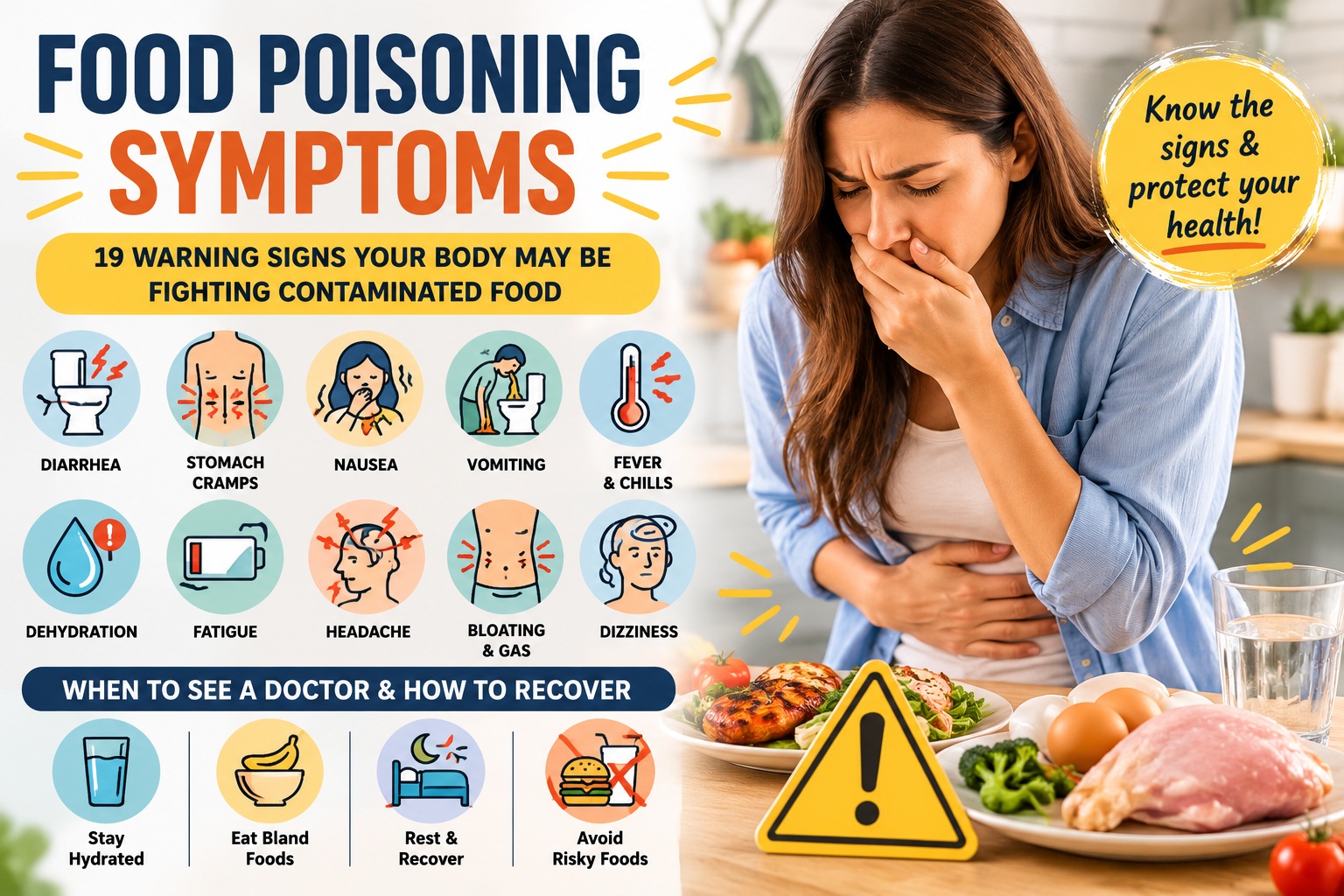
    Food Poisoning Symptoms: 19 Warning Signs Your Body May Be Fighting Contaminated Food

    Food poisoning can strike suddenly and leave you wondering whether you ate something bad, caught a stomach virus, or are dealing with a more serious infection. While many cases improve within a few days, some symptoms can become dangerous if ignored.

    This guide explains the most common and hidden food poisoning symptoms, how quickly they start, when symptoms become serious, and the warning signs that may require medical attention.


    What Is Food Poisoning?

    Food Poisoning occurs when contaminated food or drinks contain harmful:

    • Bacteria
    • Viruses
    • Parasites
    • Toxins

    Common causes include:

    • Undercooked meat
    • Raw eggs
    • Spoiled food
    • Contaminated water
    • Improper food storage
    • Cross-contamination

    Symptoms may appear within hours or even days after eating contaminated food.


    19 Food Poisoning Symptoms You Should Never Ignore

    1. Sudden Diarrhea

    Diarrhea is the most common symptom of food poisoning.

    It may be:

    • Watery
    • Frequent
    • Urgent
    • Severe

    Some infections may also cause bloody diarrhea, which requires medical attention.


    2. Stomach Cramps

    Painful abdominal cramps often occur suddenly.

    Many people describe:

    • Sharp stomach pain
    • Twisting cramps
    • Lower abdominal pressure
    • Pain that comes in waves

    3. Nausea

    Nausea is often one of the earliest signs.

    You may feel:

    • Queasy
    • Unable to eat
    • Sensitive to smells
    • Motion sickness-like discomfort

    4. Vomiting

    The body may try to remove toxins through vomiting.

    Repeated vomiting increases the risk of:

    • Dehydration
    • Weakness
    • Electrolyte imbalance

    5. Fever

    Some types of food poisoning trigger fever as the immune system fights infection.

    Fever may occur alongside:

    • Chills
    • Sweating
    • Body aches

    6. Chills and Sweating

    One hidden symptom people frequently search online is unexplained chills after eating.

    You may experience:

    • Cold shivers
    • Sweating
    • Sudden body temperature changes

    7. Extreme Fatigue

    Food poisoning can leave you feeling:

    • Weak
    • Drained
    • Exhausted
    • Unable to concentrate

    Fatigue often worsens with dehydration.


    8. Dehydration

    Dehydration is one of the most dangerous complications.

    Symptoms include:

    • Dry mouth
    • Dizziness
    • Dark urine
    • Rapid heartbeat
    • Weakness

    Children and older adults are especially vulnerable.


    9. Headache

    Headaches are commonly caused by:

    • Fluid loss
    • Fever
    • Infection
    • Inflammation

    Some people experience migraine-like pain.


    10. Loss of Appetite

    Many people lose interest in food completely for several days.

    This happens because the digestive system becomes irritated and inflamed.


    11. Bloating and Gas

    Food poisoning may disrupt digestion and gut bacteria, causing:

    • Swollen stomach
    • Pressure
    • Excess gas
    • Discomfort after eating

    12. Muscle Aches

    Body aches can make food poisoning feel similar to the flu.

    Muscle soreness is especially common with bacterial infections.


    13. Dizziness

    Dizziness often occurs because of:

    • Dehydration
    • Low blood pressure
    • Weakness
    • Fluid loss

    Standing up quickly may worsen symptoms.


    14. Bloody Stool

    Blood in stool should never be ignored.

    It may indicate:

    • Severe bacterial infection
    • Intestinal inflammation
    • More dangerous foodborne illness

    15. Symptoms Starting Hours After Eating

    Timing is one of the biggest clues.

    Many people notice symptoms after:

    • Restaurant meals
    • Buffets
    • Street food
    • Cookouts
    • Seafood
    • Leftover foods

    16. Symptoms That Feel Like Stomach Flu

    Food poisoning is commonly confused with:

    • Viral gastroenteritis
    • Indigestion
    • Stomach bug

    However, food poisoning often develops more suddenly.


    17. Diarrhea Lasting More Than 3 Days

    Persistent diarrhea may signal:

    • Severe infection
    • Parasites
    • Dangerous dehydration risk

    Medical attention may be necessary.


    18. Confusion or Severe Weakness

    Serious dehydration can affect the nervous system.

    Emergency symptoms include:

    • Confusion
    • Fainting
    • Inability to stay awake
    • Extreme weakness

    19. Symptoms After Specific Foods

    Certain foods are more commonly linked to food poisoning, including:

    • Chicken
    • Eggs
    • Seafood
    • Dairy
    • Rice left at room temperature
    • Raw sprouts

    How Long Do Food Poisoning Symptoms Last?

    Most mild cases improve within:

    • 24 to 72 hours

    However:

    • Fatigue may continue longer
    • Digestion may remain sensitive for days
    • Severe infections may last over a week

    When Should You See a Doctor?

    Seek medical help immediately if you experience:

    • Blood in stool
    • High fever
    • Severe dehydration
    • Persistent vomiting
    • Severe abdominal pain
    • Symptoms lasting longer than 3 days

    Higher-risk groups include:

    • Infants
    • Elderly adults
    • Pregnant women
    • People with weakened immune systems

    Biggest Mistakes People Make After Food Poisoning

    Not Drinking Enough Fluids

    Many people underestimate dehydration risk.

    Eating Heavy Foods Too Soon

    Greasy or spicy foods can worsen symptoms.

    Ignoring Blood in Stool

    This may signal serious bacterial infection.

    Taking Too Much Anti-Diarrheal Medication

    In some cases, diarrhea helps the body remove toxins and bacteria.


    How to Recover Faster From Food Poisoning

    Helpful recovery tips include:

    • Drink water frequently
    • Use oral rehydration solutions
    • Eat bland foods
    • Rest
    • Avoid alcohol
    • Avoid greasy foods

    Common recovery foods:

    • Bananas
    • Rice
    • Applesauce
    • Toast
    • Crackers

    Final Thoughts

    Food poisoning symptoms can range from mild stomach upset to severe dehydration and dangerous infection.

    The most common warning signs include:

    • Diarrhea
    • Vomiting
    • Stomach cramps
    • Fever
    • Nausea
    • Fatigue
    • Dehydration

    At the same time, lesser-known symptoms like chills, dizziness, headaches, and confusion may signal the illness is becoming more serious.

    If symptoms become severe or persistent, medical attention should never be delayed.

  • Salmonella Symptoms: 21 Warning Signs of Infection Most People Ignore

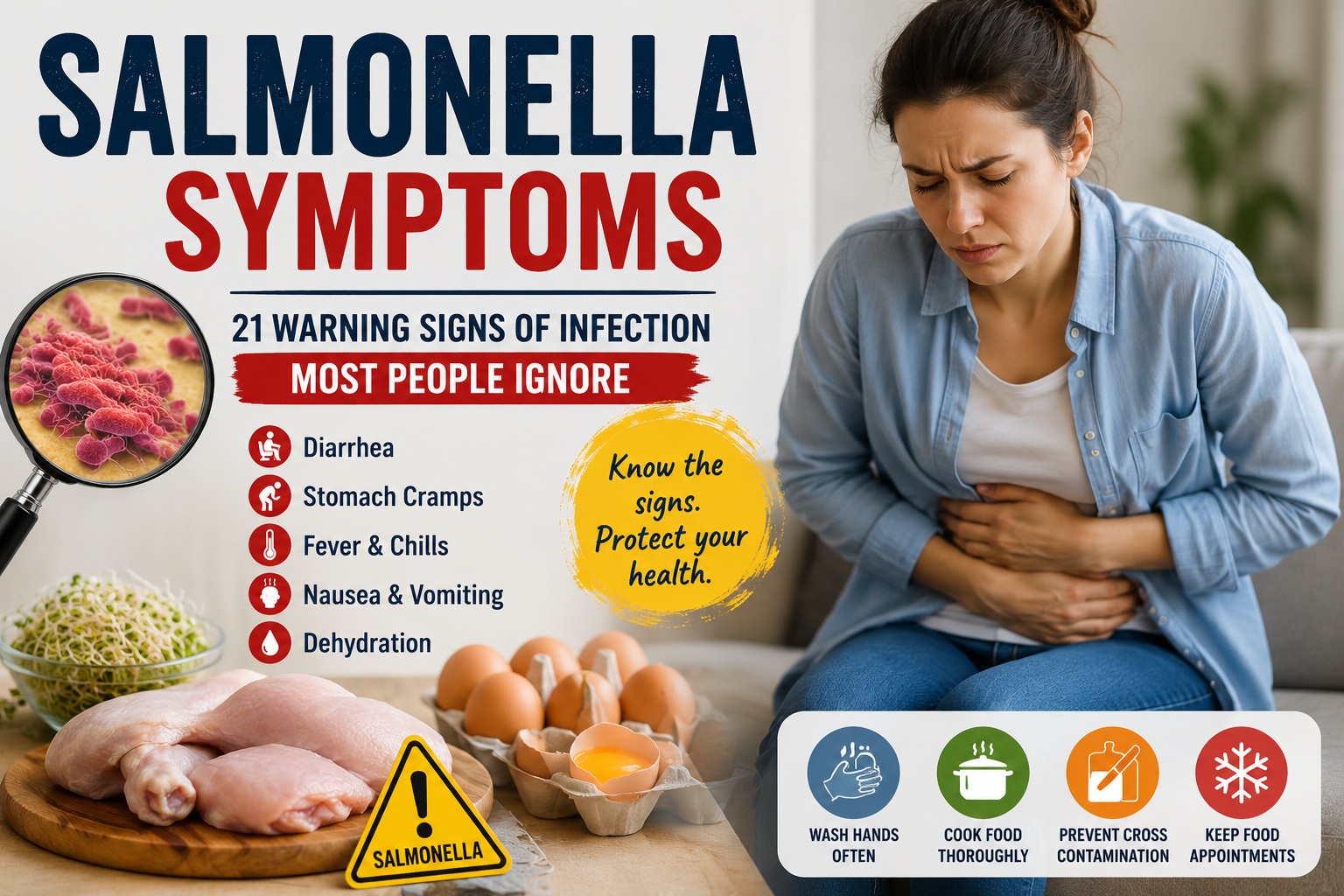
    Salmonella Symptoms: 21 Warning Signs of Infection Most People Ignore

    Salmonella infection is one of the most common causes of food poisoning worldwide, yet many people mistake the symptoms for a simple stomach bug. From sudden diarrhea and stomach cramps to hidden signs like dehydration, chills, and unusual fatigue, salmonella symptoms can appear quickly and become serious if ignored.

    This guide explains the early symptoms of salmonella, hidden warning signs, how long symptoms last, when to seek medical help, and the biggest mistakes people make after food poisoning.

    What Is Salmonella?

    Salmonella Infection is a bacterial infection usually caused by contaminated food or water. It commonly spreads through:

    • Raw or undercooked chicken
    • Eggs
    • Unpasteurized milk
    • Contaminated fruits and vegetables
    • Poor food handling
    • Reptiles and pets carrying bacteria

    Symptoms often begin within 6 hours to 6 days after exposure and can last several days. (cdc.gov)


    21 Salmonella Symptoms You Should Never Ignore

    1. Sudden Diarrhea

    Diarrhea is the most common symptom of salmonella infection.

    It may be:

    • Frequent
    • Watery
    • Urgent
    • Severe

    In some cases, diarrhea can become bloody, which may indicate a more serious infection.


    2. Stomach Cramps

    Painful abdominal cramps are another classic sign.

    Many people describe the pain as:

    • Sharp
    • Twisting
    • Cramping waves
    • Lower abdominal pressure

    The cramps are often stronger than ordinary indigestion.


    3. Fever

    A fever commonly develops as the body fights the bacterial infection.

    Typical salmonella fevers range from:

    • 100°F to 102°F (37.7°C to 38.8°C)

    High fever may signal a more severe infection.


    4. Nausea

    Many people feel nauseated before diarrhea begins.

    This symptom may include:

    • Loss of appetite
    • Queasy stomach
    • Motion sickness feeling
    • Sudden disgust toward food

    5. Vomiting

    Vomiting may occur alongside diarrhea, increasing the risk of dehydration.

    Frequent vomiting is more common in:

    • Children
    • Older adults
    • People with weak immune systems

    6. Chills and Shaking

    One hidden salmonella symptom people often search online is unexplained chills.

    You may experience:

    • Shivering
    • Sweating
    • Feeling cold despite fever
    • Body shaking

    7. Headache

    Bacterial infections frequently trigger headaches due to:

    • Fever
    • Dehydration
    • Inflammation

    Some people report migraine-like headaches during salmonella infection.


    8. Extreme Fatigue

    Feeling weak or exhausted is extremely common.

    Many people say salmonella fatigue feels:

    • Sudden
    • Draining
    • Different from normal tiredness

    Dehydration can worsen fatigue quickly.


    9. Muscle Pain

    Body aches and muscle soreness may appear alongside fever and chills.

    This symptom often makes salmonella feel similar to the flu.


    10. Dehydration

    Dehydration is one of the biggest dangers of salmonella infection.

    Warning signs include:

    • Dry mouth
    • Dizziness
    • Dark urine
    • Rapid heartbeat
    • Weakness
    • Confusion

    Children and elderly adults are especially vulnerable.


    11. Bloody Stool

    Blood in stool is not considered normal food poisoning.

    This symptom may indicate:

    • Severe intestinal inflammation
    • Invasive bacterial infection

    Medical attention is recommended immediately.


    12. Loss of Appetite

    Many infected people completely lose interest in food for several days.

    This happens because the digestive system becomes inflamed and irritated.


    13. Bloating and Gas

    Salmonella can disrupt gut bacteria and digestion, causing:

    • Abdominal bloating
    • Excess gas
    • Pressure
    • Swollen stomach feeling

    14. Dizziness

    Dizziness often results from:

    • Fluid loss
    • Fever
    • Low blood pressure
    • Electrolyte imbalance

    Standing up may suddenly feel difficult.


    15. Fast Heartbeat

    Dehydration and fever may cause:

    • Racing heart
    • Palpitations
    • Increased pulse

    This is a warning sign the body is under stress.


    16. Symptoms That Start Suddenly After Eating

    One of the biggest clues is timing.

    Many people notice symptoms beginning:

    • Hours after restaurant meals
    • After eating chicken or eggs
    • After picnics or buffets
    • During travel

    17. Symptoms That Feel Like “Stomach Flu”

    People commonly mistake salmonella for:

    • Viral gastroenteritis
    • Food intolerance
    • Indigestion
    • Flu

    However, salmonella symptoms are often more intense and longer-lasting.


    18. Diarrhea Lasting More Than 3 Days

    Most mild food poisoning improves quickly.

    Persistent diarrhea may indicate:

    • Salmonella
    • Severe bacterial infection
    • Need for medical care

    19. Symptoms That Return After Improving

    Some people briefly feel better before symptoms return.

    This can happen if:

    • Infection continues spreading
    • Dehydration worsens
    • Antibiotics disrupt gut bacteria

    20. Confusion or Severe Weakness

    Serious dehydration can affect the brain and nervous system.

    Emergency symptoms include:

    • Confusion
    • Fainting
    • Inability to stay awake
    • Severe weakness

    21. Reactive Arthritis After Infection

    A lesser-known complication is reactive arthritis.

    Weeks after infection, some people develop:

    • Joint pain
    • Knee swelling
    • Eye irritation
    • Painful urination

    This complication can last months.


    How Long Do Salmonella Symptoms Last?

    Most people recover within:

    • 4 to 7 days

    However:

    • Fatigue may last longer
    • Digestion may remain sensitive for weeks
    • Bowel habits may temporarily change

    (mayoclinic.org)


    When Should You See a Doctor?

    Seek medical attention immediately if you experience:

    • Blood in stool
    • High fever
    • Severe dehydration
    • Fainting
    • Persistent vomiting
    • Severe abdominal pain
    • Symptoms lasting over a week

    Infants, pregnant women, elderly adults, and immunocompromised individuals have higher risk of complications.


    Biggest Mistakes People Make With Salmonella

    Ignoring Dehydration

    Many people underestimate how quickly dehydration becomes dangerous.

    Taking Anti-Diarrheal Medication Too Soon

    Stopping diarrhea immediately may slow the body’s ability to clear bacteria.

    Not Washing Hands Properly

    Salmonella spreads easily between family members.

    Eating Too Soon After Vomiting

    Heavy foods can worsen symptoms and irritation.


    What Foods Are Commonly Linked to Salmonella?

    High-risk foods include:

    • Raw eggs
    • Undercooked chicken
    • Raw cookie dough
    • Unwashed produce
    • Sprouts
    • Unpasteurized dairy

    Proper cooking and food handling significantly reduce risk.

    (who.int)


    How to Recover Faster From Salmonella

    Recovery tips include:

    • Drink plenty of fluids
    • Use oral rehydration solutions
    • Eat bland foods
    • Avoid greasy foods
    • Rest
    • Wash hands frequently

    Common “BRAT diet” foods include:

    • Bananas
    • Rice
    • Applesauce
    • Toast

    Final Thoughts

    Salmonella symptoms can range from mild stomach discomfort to serious dehydration and infection. The most common warning signs include:

    • Diarrhea
    • Stomach cramps
    • Fever
    • Nausea
    • Vomiting
    • Fatigue
    • Dehydration

    At the same time, lesser-known symptoms like chills, headaches, dizziness, racing heart, and lingering weakness are also common.

    Because salmonella can become dangerous quickly — especially in children, older adults, and people with weakened immune systems — severe symptoms should never be ignored.

  • Early Pregnancy Symptoms: 23 Hidden Clues Your Body May Be Giving You

    Early Pregnancy Symptoms: 23 Hidden Clues Your Body May Be Giving You

    Pregnancy symptoms can begin surprisingly early — sometimes even before a missed period. While every pregnancy is different, many women search online for the same questions: What are the first signs of pregnancy? Can you feel pregnant after one week? Is implantation bleeding real? Are PMS and pregnancy symptoms the same?

    This guide explains the most common, early, unusual, and lesser-known pregnancy symptoms, along with when they usually appear and when you should take a pregnancy test.

    What Are the Very First Signs of Pregnancy?

    The earliest pregnancy symptoms are caused by rising hormones, especially human chorionic gonadotropin (hCG) and progesterone. These hormonal changes affect the entire body.

    The most common early pregnancy signs include:

    • Missed period
    • Light spotting or implantation bleeding
    • Breast tenderness
    • Fatigue
    • Nausea or morning sickness
    • Frequent urination
    • Mood swings
    • Food cravings or aversions
    • Increased sense of smell
    • Mild cramping

    Many women notice symptoms within 1–2 weeks after conception, while others may not feel anything for several weeks.

    1. Missed Period: The Most Common Pregnancy Symptom

    A missed menstrual period is often the first major clue. If your cycle is regular and your period is late by more than a week, pregnancy becomes a possibility.

    However, stress, hormonal imbalances, PCOS, illness, travel, or sudden weight changes can also delay periods. A home pregnancy test is the best next step.

    2. Implantation Bleeding: The “Hidden” Early Sign Many Women Miss

    One of the most searched early pregnancy symptoms is implantation bleeding.

    This happens when the fertilized egg attaches to the uterus lining, usually 6–12 days after ovulation. Implantation spotting is usually:

    • Light pink or brown
    • Much lighter than a normal period
    • Short-lasting (a few hours to 2 days)
    • Accompanied by mild cramping

    Because it happens around the time a period is expected, many women mistake it for an early or light period.

    3. Breast Changes and Sensitive Nipples

    Hormonal shifts increase blood flow and breast tissue sensitivity very early in pregnancy.

    Common breast symptoms include:

    • Soreness
    • Swelling
    • Tingling
    • Heavier feeling
    • Darker nipples
    • More visible veins

    Some women notice this symptom before a missed period.

    4. Extreme Fatigue: Feeling Unusually Tired

    Feeling exhausted without explanation is another major early pregnancy symptom.

    Increased progesterone levels can make you feel sleepy, drained, and low on energy — even during the first few weeks. Some women describe it as “a different kind of tiredness.”

    Fatigue is especially common during the first trimester.

    5. Morning Sickness Isn’t Always in the Morning

    Morning sickness can occur at any time of the day.

    Symptoms may include:

    • Nausea
    • Vomiting
    • Food aversions
    • Motion sickness
    • Sudden disgust toward smells

    For many women, nausea starts around week 5 or 6 of pregnancy, although some feel queasy earlier. Up to 70% of pregnant women experience some form of morning sickness.

    Hidden Morning Sickness Triggers

    Many women search for unexpected nausea triggers, including:

    • Coffee smell
    • Toothpaste taste
    • Fried foods
    • Perfume
    • Cigarette smoke
    • Garlic or onion smells

    A heightened sense of smell is strongly linked to early pregnancy hormones.

    6. Frequent Urination

    Needing to pee more often can begin surprisingly early.

    Pregnancy increases blood flow to the kidneys and pelvic area, causing more urine production. This symptom often continues throughout pregnancy.

    7. Mood Swings and Emotional Changes

    Sudden emotional changes are common in early pregnancy.

    You may experience:

    • Irritability
    • Crying easily
    • Anxiety
    • Emotional sensitivity
    • Feeling unusually emotional

    Hormonal fluctuations affect neurotransmitters in the brain, which can create rapid mood changes similar to PMS — but often more intense.

    8. Food Cravings and Food Aversions

    One of the strangest pregnancy symptoms is a sudden change in food preferences.

    Common cravings include:

    • Chocolate
    • Pickles
    • Spicy foods
    • Ice cream
    • Sour foods

    Meanwhile, foods you once loved may suddenly seem unbearable.

    Food aversions are particularly common during the first trimester.

    9. Increased Sense of Smell

    Many women report smelling things more strongly very early in pregnancy.

    You may suddenly become sensitive to:

    • Cooking smells
    • Perfume
    • Cleaning products
    • Body odor
    • Garbage smells

    This heightened smell sensitivity is believed to be linked to estrogen changes.

    10. Mild Cramping Without a Period

    Light cramping in early pregnancy is common and usually harmless.

    Implantation and uterine changes can cause:

    • Pulling sensations
    • Mild pelvic pressure
    • Light cramps similar to PMS

    However, severe pain or heavy bleeding should never be ignored.

    Lesser-Known and “Secret” Pregnancy Symptoms

    Many women search online because they experience unusual symptoms they never expected.

    Some lesser-known pregnancy symptoms include:

    Metallic Taste in the Mouth

    A strange metallic taste is a surprisingly common early pregnancy symptom caused by hormonal changes.

    Nasal Congestion

    Pregnancy hormones can swell nasal tissues, causing stuffiness and even nosebleeds.

    Bloating and Constipation

    Progesterone slows digestion, leading to bloating and constipation very early in pregnancy.

    Headaches

    Changing hormone levels and blood circulation can trigger headaches in early pregnancy.

    Acne or Skin Changes

    Some women develop glowing skin, while others experience acne breakouts.

    Higher Basal Body Temperature

    Women tracking fertility may notice that their basal body temperature remains elevated after ovulation.

    Pregnancy Symptoms vs PMS: How to Tell the Difference

    This is one of the biggest online concerns.

    Many early pregnancy symptoms closely resemble PMS symptoms, including:

    • Breast tenderness
    • Mood swings
    • Cramping
    • Bloating
    • Fatigue
    • Food cravings

    The biggest differences are usually:

    PMSPregnancy
    Symptoms stop when period beginsSymptoms continue or increase
    Bleeding becomes heavierSpotting is lighter
    Fatigue is milderFatigue may feel extreme
    Symptoms follow usual patternSymptoms feel unusual or stronger

    Still, symptoms alone cannot confirm pregnancy.

    When Do Pregnancy Symptoms Start?

    Here’s a general timeline:

    Pregnancy StageCommon Symptoms
    1 week after conceptionImplantation spotting, mild cramps
    Week 4Missed period, fatigue
    Week 5–6Nausea, breast tenderness
    Week 6–8Frequent urination, mood swings
    Week 8+Food cravings, bloating, visible changes

    Some women experience symptoms very early, while others have almost none.

    When Should You Take a Pregnancy Test?

    Most home pregnancy tests work best:

    • After a missed period
    • About 2 weeks after ovulation
    • Using first-morning urine

    Testing too early can produce a false negative because hCG levels may still be low.

    Symptoms That Need Immediate Medical Attention

    While many early pregnancy symptoms are normal, some warning signs require urgent medical care.

    Seek medical help if you experience:

    • Heavy bleeding
    • Severe abdominal pain
    • Sharp one-sided pain
    • Fever
    • Fainting
    • Severe dizziness
    • Vision changes

    These could indicate complications such as ectopic pregnancy or miscarriage.

    Final Thoughts

    Pregnancy symptoms can vary dramatically from person to person. Some women notice subtle signs within days of conception, while others do not feel different until several weeks later.

    The earliest and most common symptoms include:

    • Missed period
    • Implantation spotting
    • Fatigue
    • Nausea
    • Breast tenderness
    • Frequent urination
    • Mood changes

    At the same time, lesser-known symptoms like metallic taste, smell sensitivity, nasal congestion, and unusual cravings are also surprisingly common.

    Because pregnancy symptoms often overlap with PMS, the only reliable confirmation is a pregnancy test followed by medical evaluation. If you suspect you may be pregnant, tracking symptoms and testing at the right time can provide clearer answers.