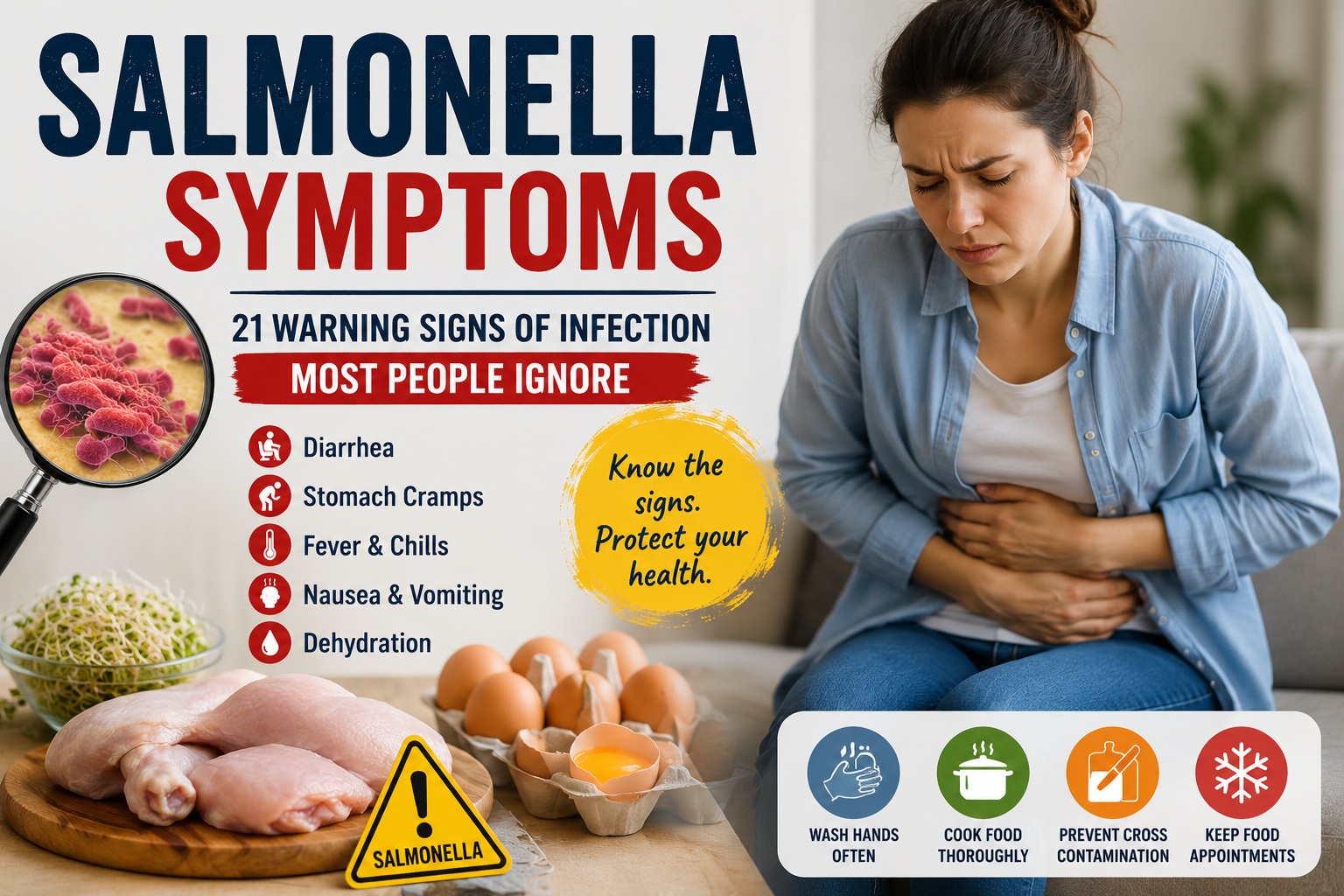
Salmonella infection is one of the most common causes of food poisoning worldwide, yet many people mistake the symptoms for a simple stomach bug. From sudden diarrhea and stomach cramps to hidden signs like dehydration, chills, and unusual fatigue, salmonella symptoms can appear quickly and become serious if ignored.
This guide explains the early symptoms of salmonella, hidden warning signs, how long symptoms last, when to seek medical help, and the biggest mistakes people make after food poisoning.
What Is Salmonella?
Salmonella Infection is a bacterial infection usually caused by contaminated food or water. It commonly spreads through:
- Raw or undercooked chicken
- Eggs
- Unpasteurized milk
- Contaminated fruits and vegetables
- Poor food handling
- Reptiles and pets carrying bacteria
Symptoms often begin within 6 hours to 6 days after exposure and can last several days. (cdc.gov)
21 Salmonella Symptoms You Should Never Ignore
1. Sudden Diarrhea
Diarrhea is the most common symptom of salmonella infection.
It may be:
- Frequent
- Watery
- Urgent
- Severe
In some cases, diarrhea can become bloody, which may indicate a more serious infection.
2. Stomach Cramps
Painful abdominal cramps are another classic sign.
Many people describe the pain as:
- Sharp
- Twisting
- Cramping waves
- Lower abdominal pressure
The cramps are often stronger than ordinary indigestion.
3. Fever
A fever commonly develops as the body fights the bacterial infection.
Typical salmonella fevers range from:
- 100°F to 102°F (37.7°C to 38.8°C)
High fever may signal a more severe infection.
4. Nausea
Many people feel nauseated before diarrhea begins.
This symptom may include:
- Loss of appetite
- Queasy stomach
- Motion sickness feeling
- Sudden disgust toward food
5. Vomiting
Vomiting may occur alongside diarrhea, increasing the risk of dehydration.
Frequent vomiting is more common in:
- Children
- Older adults
- People with weak immune systems
6. Chills and Shaking
One hidden salmonella symptom people often search online is unexplained chills.
You may experience:
- Shivering
- Sweating
- Feeling cold despite fever
- Body shaking
7. Headache
Bacterial infections frequently trigger headaches due to:
- Fever
- Dehydration
- Inflammation
Some people report migraine-like headaches during salmonella infection.
8. Extreme Fatigue
Feeling weak or exhausted is extremely common.
Many people say salmonella fatigue feels:
- Sudden
- Draining
- Different from normal tiredness
Dehydration can worsen fatigue quickly.
9. Muscle Pain
Body aches and muscle soreness may appear alongside fever and chills.
This symptom often makes salmonella feel similar to the flu.
10. Dehydration
Dehydration is one of the biggest dangers of salmonella infection.
Warning signs include:
- Dry mouth
- Dizziness
- Dark urine
- Rapid heartbeat
- Weakness
- Confusion
Children and elderly adults are especially vulnerable.
11. Bloody Stool
Blood in stool is not considered normal food poisoning.
This symptom may indicate:
- Severe intestinal inflammation
- Invasive bacterial infection
Medical attention is recommended immediately.
12. Loss of Appetite
Many infected people completely lose interest in food for several days.
This happens because the digestive system becomes inflamed and irritated.
13. Bloating and Gas
Salmonella can disrupt gut bacteria and digestion, causing:
- Abdominal bloating
- Excess gas
- Pressure
- Swollen stomach feeling
14. Dizziness
Dizziness often results from:
- Fluid loss
- Fever
- Low blood pressure
- Electrolyte imbalance
Standing up may suddenly feel difficult.
15. Fast Heartbeat
Dehydration and fever may cause:
- Racing heart
- Palpitations
- Increased pulse
This is a warning sign the body is under stress.
16. Symptoms That Start Suddenly After Eating
One of the biggest clues is timing.
Many people notice symptoms beginning:
- Hours after restaurant meals
- After eating chicken or eggs
- After picnics or buffets
- During travel
17. Symptoms That Feel Like “Stomach Flu”
People commonly mistake salmonella for:
- Viral gastroenteritis
- Food intolerance
- Indigestion
- Flu
However, salmonella symptoms are often more intense and longer-lasting.
18. Diarrhea Lasting More Than 3 Days
Most mild food poisoning improves quickly.
Persistent diarrhea may indicate:
- Salmonella
- Severe bacterial infection
- Need for medical care
19. Symptoms That Return After Improving
Some people briefly feel better before symptoms return.
This can happen if:
- Infection continues spreading
- Dehydration worsens
- Antibiotics disrupt gut bacteria
20. Confusion or Severe Weakness
Serious dehydration can affect the brain and nervous system.
Emergency symptoms include:
- Confusion
- Fainting
- Inability to stay awake
- Severe weakness
21. Reactive Arthritis After Infection
A lesser-known complication is reactive arthritis.
Weeks after infection, some people develop:
- Joint pain
- Knee swelling
- Eye irritation
- Painful urination
This complication can last months.
How Long Do Salmonella Symptoms Last?
Most people recover within:
- 4 to 7 days
However:
- Fatigue may last longer
- Digestion may remain sensitive for weeks
- Bowel habits may temporarily change
When Should You See a Doctor?
Seek medical attention immediately if you experience:
- Blood in stool
- High fever
- Severe dehydration
- Fainting
- Persistent vomiting
- Severe abdominal pain
- Symptoms lasting over a week
Infants, pregnant women, elderly adults, and immunocompromised individuals have higher risk of complications.
Biggest Mistakes People Make With Salmonella
Ignoring Dehydration
Many people underestimate how quickly dehydration becomes dangerous.
Taking Anti-Diarrheal Medication Too Soon
Stopping diarrhea immediately may slow the body’s ability to clear bacteria.
Not Washing Hands Properly
Salmonella spreads easily between family members.
Eating Too Soon After Vomiting
Heavy foods can worsen symptoms and irritation.
What Foods Are Commonly Linked to Salmonella?
High-risk foods include:
- Raw eggs
- Undercooked chicken
- Raw cookie dough
- Unwashed produce
- Sprouts
- Unpasteurized dairy
Proper cooking and food handling significantly reduce risk.
(who.int)
How to Recover Faster From Salmonella
Recovery tips include:
- Drink plenty of fluids
- Use oral rehydration solutions
- Eat bland foods
- Avoid greasy foods
- Rest
- Wash hands frequently
Common “BRAT diet” foods include:
- Bananas
- Rice
- Applesauce
- Toast
Final Thoughts
Salmonella symptoms can range from mild stomach discomfort to serious dehydration and infection. The most common warning signs include:
- Diarrhea
- Stomach cramps
- Fever
- Nausea
- Vomiting
- Fatigue
- Dehydration
At the same time, lesser-known symptoms like chills, headaches, dizziness, racing heart, and lingering weakness are also common.
Because salmonella can become dangerous quickly — especially in children, older adults, and people with weakened immune systems — severe symptoms should never be ignored.