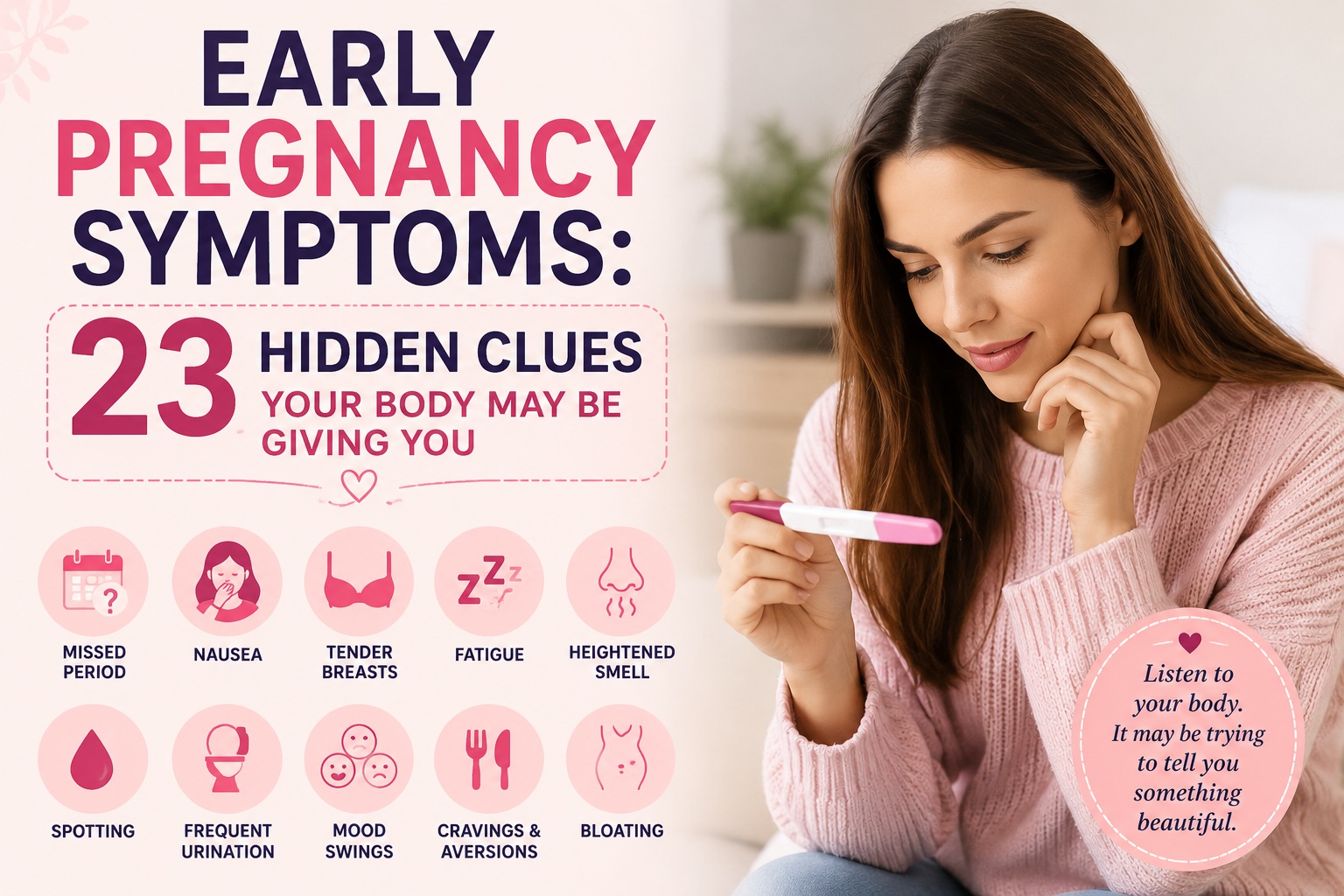
Pregnancy symptoms can begin surprisingly early — sometimes even before a missed period. While every pregnancy is different, many women search online for the same questions: What are the first signs of pregnancy? Can you feel pregnant after one week? Is implantation bleeding real? Are PMS and pregnancy symptoms the same?
This guide explains the most common, early, unusual, and lesser-known pregnancy symptoms, along with when they usually appear and when you should take a pregnancy test.
What Are the Very First Signs of Pregnancy?
The earliest pregnancy symptoms are caused by rising hormones, especially human chorionic gonadotropin (hCG) and progesterone. These hormonal changes affect the entire body.
The most common early pregnancy signs include:
- Missed period
- Light spotting or implantation bleeding
- Breast tenderness
- Fatigue
- Nausea or morning sickness
- Frequent urination
- Mood swings
- Food cravings or aversions
- Increased sense of smell
- Mild cramping
Many women notice symptoms within 1–2 weeks after conception, while others may not feel anything for several weeks.
1. Missed Period: The Most Common Pregnancy Symptom
A missed menstrual period is often the first major clue. If your cycle is regular and your period is late by more than a week, pregnancy becomes a possibility.
However, stress, hormonal imbalances, PCOS, illness, travel, or sudden weight changes can also delay periods. A home pregnancy test is the best next step.
2. Implantation Bleeding: The “Hidden” Early Sign Many Women Miss
One of the most searched early pregnancy symptoms is implantation bleeding.
This happens when the fertilized egg attaches to the uterus lining, usually 6–12 days after ovulation. Implantation spotting is usually:
- Light pink or brown
- Much lighter than a normal period
- Short-lasting (a few hours to 2 days)
- Accompanied by mild cramping
Because it happens around the time a period is expected, many women mistake it for an early or light period.
3. Breast Changes and Sensitive Nipples
Hormonal shifts increase blood flow and breast tissue sensitivity very early in pregnancy.
Common breast symptoms include:
- Soreness
- Swelling
- Tingling
- Heavier feeling
- Darker nipples
- More visible veins
Some women notice this symptom before a missed period.
4. Extreme Fatigue: Feeling Unusually Tired
Feeling exhausted without explanation is another major early pregnancy symptom.
Increased progesterone levels can make you feel sleepy, drained, and low on energy — even during the first few weeks. Some women describe it as “a different kind of tiredness.”
Fatigue is especially common during the first trimester.
5. Morning Sickness Isn’t Always in the Morning
Morning sickness can occur at any time of the day.
Symptoms may include:
- Nausea
- Vomiting
- Food aversions
- Motion sickness
- Sudden disgust toward smells
For many women, nausea starts around week 5 or 6 of pregnancy, although some feel queasy earlier. Up to 70% of pregnant women experience some form of morning sickness.
Hidden Morning Sickness Triggers
Many women search for unexpected nausea triggers, including:
- Coffee smell
- Toothpaste taste
- Fried foods
- Perfume
- Cigarette smoke
- Garlic or onion smells
A heightened sense of smell is strongly linked to early pregnancy hormones.
6. Frequent Urination
Needing to pee more often can begin surprisingly early.
Pregnancy increases blood flow to the kidneys and pelvic area, causing more urine production. This symptom often continues throughout pregnancy.
7. Mood Swings and Emotional Changes
Sudden emotional changes are common in early pregnancy.
You may experience:
- Irritability
- Crying easily
- Anxiety
- Emotional sensitivity
- Feeling unusually emotional
Hormonal fluctuations affect neurotransmitters in the brain, which can create rapid mood changes similar to PMS — but often more intense.
8. Food Cravings and Food Aversions
One of the strangest pregnancy symptoms is a sudden change in food preferences.
Common cravings include:
- Chocolate
- Pickles
- Spicy foods
- Ice cream
- Sour foods
Meanwhile, foods you once loved may suddenly seem unbearable.
Food aversions are particularly common during the first trimester.
9. Increased Sense of Smell
Many women report smelling things more strongly very early in pregnancy.
You may suddenly become sensitive to:
- Cooking smells
- Perfume
- Cleaning products
- Body odor
- Garbage smells
This heightened smell sensitivity is believed to be linked to estrogen changes.
10. Mild Cramping Without a Period
Light cramping in early pregnancy is common and usually harmless.
Implantation and uterine changes can cause:
- Pulling sensations
- Mild pelvic pressure
- Light cramps similar to PMS
However, severe pain or heavy bleeding should never be ignored.
Lesser-Known and “Secret” Pregnancy Symptoms
Many women search online because they experience unusual symptoms they never expected.
Some lesser-known pregnancy symptoms include:
Metallic Taste in the Mouth
A strange metallic taste is a surprisingly common early pregnancy symptom caused by hormonal changes.
Nasal Congestion
Pregnancy hormones can swell nasal tissues, causing stuffiness and even nosebleeds.
Bloating and Constipation
Progesterone slows digestion, leading to bloating and constipation very early in pregnancy.
Headaches
Changing hormone levels and blood circulation can trigger headaches in early pregnancy.
Acne or Skin Changes
Some women develop glowing skin, while others experience acne breakouts.
Higher Basal Body Temperature
Women tracking fertility may notice that their basal body temperature remains elevated after ovulation.
Pregnancy Symptoms vs PMS: How to Tell the Difference
This is one of the biggest online concerns.
Many early pregnancy symptoms closely resemble PMS symptoms, including:
- Breast tenderness
- Mood swings
- Cramping
- Bloating
- Fatigue
- Food cravings
The biggest differences are usually:
| PMS | Pregnancy |
|---|---|
| Symptoms stop when period begins | Symptoms continue or increase |
| Bleeding becomes heavier | Spotting is lighter |
| Fatigue is milder | Fatigue may feel extreme |
| Symptoms follow usual pattern | Symptoms feel unusual or stronger |
Still, symptoms alone cannot confirm pregnancy.
When Do Pregnancy Symptoms Start?
Here’s a general timeline:
| Pregnancy Stage | Common Symptoms |
|---|---|
| 1 week after conception | Implantation spotting, mild cramps |
| Week 4 | Missed period, fatigue |
| Week 5–6 | Nausea, breast tenderness |
| Week 6–8 | Frequent urination, mood swings |
| Week 8+ | Food cravings, bloating, visible changes |
Some women experience symptoms very early, while others have almost none.
When Should You Take a Pregnancy Test?
Most home pregnancy tests work best:
- After a missed period
- About 2 weeks after ovulation
- Using first-morning urine
Testing too early can produce a false negative because hCG levels may still be low.
Symptoms That Need Immediate Medical Attention
While many early pregnancy symptoms are normal, some warning signs require urgent medical care.
Seek medical help if you experience:
- Heavy bleeding
- Severe abdominal pain
- Sharp one-sided pain
- Fever
- Fainting
- Severe dizziness
- Vision changes
These could indicate complications such as ectopic pregnancy or miscarriage.
Final Thoughts
Pregnancy symptoms can vary dramatically from person to person. Some women notice subtle signs within days of conception, while others do not feel different until several weeks later.
The earliest and most common symptoms include:
- Missed period
- Implantation spotting
- Fatigue
- Nausea
- Breast tenderness
- Frequent urination
- Mood changes
At the same time, lesser-known symptoms like metallic taste, smell sensitivity, nasal congestion, and unusual cravings are also surprisingly common.
Because pregnancy symptoms often overlap with PMS, the only reliable confirmation is a pregnancy test followed by medical evaluation. If you suspect you may be pregnant, tracking symptoms and testing at the right time can provide clearer answers.