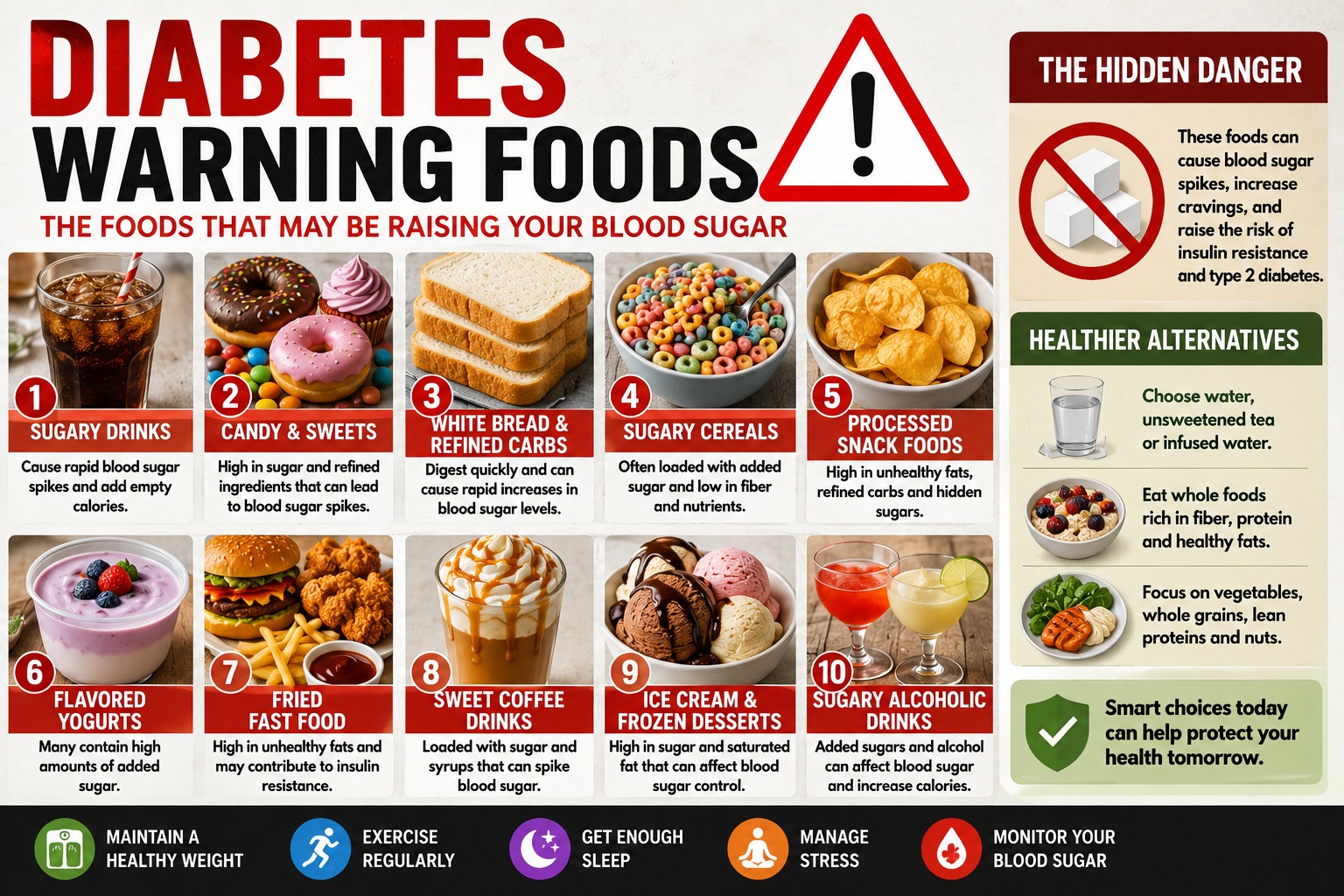
Diabetes and blood sugar problems are becoming increasingly common worldwide. Modern diets filled with sugary drinks, ultra-processed snacks, refined carbohydrates, and hidden sweeteners may place extra stress on the body’s ability to regulate glucose levels.
Many people know candy and soda contain sugar, but fewer realize how many everyday foods may quietly contribute to blood sugar spikes, insulin resistance, and long-term metabolic problems.
This is why interest in “diabetes warning foods” has grown rapidly online. People are becoming more curious about which foods may negatively affect blood sugar and what healthier alternatives they can choose instead.
While no single food automatically causes diabetes, consistently poor dietary habits combined with inactivity and other lifestyle factors may increase the risk of:
- Insulin resistance
- Prediabetes
- Type 2 diabetes
- Obesity
- Metabolic syndrome
Understanding which foods may stress the body’s glucose control system can help people make smarter long-term choices.
What Happens When Blood Sugar Spikes?
When sugary or highly refined foods are consumed, blood sugar levels rise quickly.
The pancreas releases insulin to help move glucose into the body’s cells for energy.
Frequent blood sugar spikes may:
- Increase insulin demand
- Promote fat storage
- Increase cravings
- Affect energy levels
- Contribute to insulin resistance over time
The more often the body experiences rapid glucose spikes, the harder the pancreas may need to work.
- Sugary Drinks
Sugary beverages are among the most commonly discussed diabetes warning foods.
These include:
- Soft drinks
- Energy drinks
- Sweetened teas
- Flavored coffee beverages
- Sports drinks
Liquid sugar absorbs rapidly into the bloodstream and may create significant glucose spikes.
Unlike whole foods, sugary drinks often provide little fiber or satiety, making overconsumption easier.
- Candy and Sweets
Candy, pastries, cakes, donuts, and desserts often contain:
- Refined sugar
- White flour
- Unhealthy fats
These combinations may rapidly increase blood sugar while offering limited nutritional value.
Frequent consumption may contribute to long-term metabolic stress.
- White Bread and Refined Carbohydrates
Foods made from refined flour digest quickly and may behave similarly to sugar in the body.
Examples include:
- White bread
- White pasta
- Crackers
- Pastries
- Many packaged snack foods
Refined carbohydrates generally contain less fiber than whole-grain alternatives.
- Sugary Breakfast Cereals
Many cereals marketed as “healthy” contain surprisingly high amounts of added sugar.
These products may lead to:
- Morning blood sugar spikes
- Increased hunger later in the day
- Energy crashes
People often underestimate how much sugar is hidden inside flavored cereals and granola products.
- Processed Snack Foods
Chips, packaged cookies, snack bars, and fast-food items are often highly processed and calorie-dense.
Many contain:
- Refined carbohydrates
- Added sugars
- Excess sodium
- Unhealthy fats
Frequent consumption may contribute to poor metabolic health over time.
- Flavored Yogurts
Some flavored yogurts contain large amounts of added sugar despite being marketed as healthy products.
Plain yogurt with fresh fruit is often considered a better option for people trying to reduce sugar intake.
- Fried Fast Food
Deep-fried foods may contribute to:
- Weight gain
- Inflammation
- Insulin resistance
Fast-food meals are also often high in refined carbohydrates and unhealthy fats.
- Sweet Coffee Drinks
Coffee itself is not necessarily the problem.
The issue is often:
- Flavored syrups
- Whipped cream
- Added sugars
- High-calorie creamers
Some café beverages may contain as much sugar as desserts.
- Ice Cream and Frozen Desserts
Many frozen desserts combine:
- Sugar
- Saturated fat
- Artificial flavorings
Frequent overconsumption may contribute to blood sugar imbalance and excess calorie intake.
- Alcoholic Drinks With Added Sugar
Cocktails, flavored alcoholic beverages, and sugary mixers may affect blood sugar regulation.
Alcohol may also influence appetite and decision-making around food choices.
Hidden Sugars People Often Miss
Sugar appears under many different names on food labels.
Examples include:
- Corn syrup
- Dextrose
- Fructose
- Maltose
- Cane sugar
- Rice syrup
- Agave syrup
Learning to read ingredient labels can help reduce unnecessary sugar intake.
Why Modern Diets Create Blood Sugar Problems
Modern eating habits often involve:
- Frequent snacking
- Processed convenience foods
- Sugary beverages
- Large portion sizes
- Sedentary lifestyles
Over time, these habits may place continuous pressure on insulin production and glucose regulation.
Healthier Alternatives People Are Exploring
Many people trying to support healthier blood sugar levels are shifting toward:
- Whole foods
- Fiber-rich meals
- Lean proteins
- Leafy greens
- Berries
- Nuts and seeds
- Whole grains
- Water instead of sugary drinks
Small sustainable changes are often easier to maintain long-term.
Common Warning Signs of Blood Sugar Imbalance
People often begin researching diabetes warning foods after experiencing symptoms like:
- Fatigue
- Increased thirst
- Frequent urination
- Brain fog
- Sugar cravings
- Hunger shortly after meals
- Weight gain around the abdomen
Persistent symptoms should always be discussed with a healthcare professional.
Why Interest in Diabetes Warning Foods Is Growing
Awareness around:
- Hidden sugars
- Insulin resistance
- Metabolic health
- Processed food consumption
has increased significantly in recent years.
Many people are now trying to better understand how everyday foods affect their long-term health.
Can You Still Enjoy Treats?
Healthy eating does not usually require perfection.
Many experts encourage balance rather than extreme restriction.
The goal for many people is reducing excessive sugar intake while building more sustainable eating habits over time.
Many diabetes warning foods are highly processed products that may contribute to rapid blood sugar spikes, increased insulin demand, and long-term metabolic stress when consumed frequently.
Sugary drinks, refined carbohydrates, processed snacks, and hidden sugars are among the biggest concerns in modern diets.
Understanding how these foods affect blood sugar can help people make more informed decisions and support healthier long-term habits.
Small changes made consistently may have a meaningful impact on overall metabolic health and blood sugar balance.